-
Shop
- Adidas
- Advanced Technologies
- AI Skills Mastery 2026 Collection
- Apple Accessories
- Best-Sellers
- Car Accessories
- Dating & Social Confidence
- Dating & Social Skills
- Digital Resources
- Education & Learning
- Family & Parenting
- Fashion
- Fashion Accessories
- Furniture
- Gadgets
- Health & Beauty
- Health & Wellness
- Home & Garden
- Home Supplies
- Kids & Babies
- Kitchen Best-Sellers
- Lighting
- Nike
- Patio, Lawn & Garden
- Personal Growth
- Pet Care
- Pet Supplies
- Pets
- Shoes
- Sport & Outdoors
- Stress Relief & Relaxation
- Summer 2025 Fashion Collection
- Sunglasses
- Super Deals
- Travel
- Travel & Outdoors
- Wealth
- Wealth Building
- Women’s Wellness & Lifestyle
- Popular
- Best deals
Home Cardio Without Equipment: Plans for Real Progress
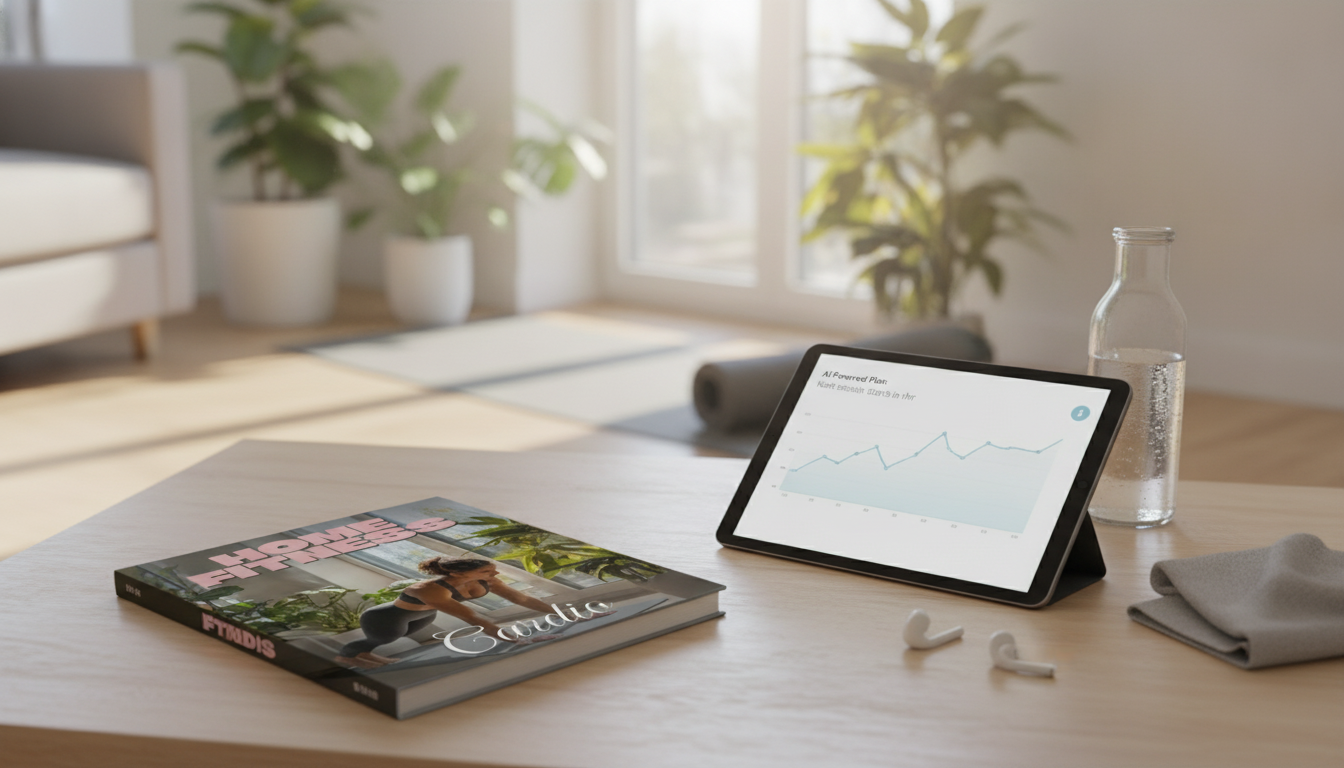
Home Fitness Cardio: Simple At-Home Workouts and Smarter Plans for Consistent Progress
Home cardio can be highly effective without equipment when sessions balance intensity, recovery, and progressive overload. A simple structure—warm-up, intervals or steady work, cool-down, and a weekly plan—helps beginners and intermediate trainees build endurance, burn calories, and support heart health while staying consistent. For general weekly activity targets, see the CDC’s Physical Activity Guidelines summary and the American Heart Association recommendations. For more guidance, see Try the 10-Minute Home Workout | American Heart Association.
What “cardio at home” looks like when it works
Good home cardio is simple: it repeatedly uses big muscle groups to raise your heart rate, then manages fatigue so you can come back tomorrow (and next week). For further reading, see Exercise/Physical Activity in Individuals with Type 2 Diabetes – PMC.
- Big muscles, repeated: legs, hips, core, and arms do rhythmic work so breathing increases and your heart rate climbs.
- Movement patterns over fancy exercises: marching, squats, hinges, step-backs, lateral shuffles, and low-impact hops cover most needs.
- Consistency first, challenge second: build frequency (showing up) before pushing intensity or duration.
- Recovery is part of the plan: easier days, sleep, hydration, and mobility reduce burnout and soreness spikes.
- Track effort simply: use easy/moderate/hard, or the talk test (easy = full sentences; moderate = short sentences; hard = a few words at a time).
Warm-up, main set, cool-down: a repeatable session template
When the session format stays the same, it’s easier to progress (and easier to start). Use this template and rotate your movements.
Warm-up (5–8 minutes)
- Joint circles (ankles, hips, shoulders)
- March in place, gradually faster
- Hip hinges (hands on thighs if needed)
- Gentle squats (comfortable depth)
- Arm swings and light shadow boxing
Main set (10–25 minutes)
Choose one: intervals (hard/easy waves) or steady moderate (a pace you can hold). Intervals are time-efficient; steady sessions build a durable aerobic base.
- Apartment-friendly “quiet cardio”: step jacks, fast feet without jumping, knee drives, toe taps on the floor, low-impact lateral shuffles.
- Joint comfort first: if anything feels cranky, reduce range of motion before adding speed.
Cool-down (3–6 minutes)
- Slow march, then slower
- Deep breathing (in through nose if comfortable)
- Light stretching: calves, quads, hip flexors, chest
No-equipment cardio moves and simple modifications
Pick 4–6 movements per session. Stick with them for 1–2 weeks so you can measure progress without guessing.
Low-impact options
- Step jacks
- Alternating knee drives
- Toe taps (front or lateral)
- Shadow boxing (jab-cross, add slips if comfortable)
- Speed skaters without jumping (step side-to-side)
Higher-intensity options
- Squat thrusts (hands down, feet back in/out; no push-up)
- Mountain climbers (slow first, then faster)
- Fast high knees (can be “running in place” without impact)
- Burpee variations (step-back burpee, or no-jump burpee)
Progressions that actually work
- Add tempo: move faster while staying controlled.
- Add complexity: combine moves (e.g., 4 punches + 2 knee drives).
- Add work time: 30 seconds becomes 35–40 seconds.
- Reduce rest: keep total work the same, shrink the easy portions.
Joint-friendly swaps and posture cues
Beginner-to-intermediate weekly plan examples (20–30 minutes each)
Sample no-equipment cardio schedules
| Level | Days/Week | Session Type | Example Main Set | Progression Target (2–4 weeks) |
|---|---|---|---|---|
| Beginner | 3 | Intervals + steady | Day 1: 8 x (30s moderate / 60s easy). Day 2: 15–20 min steady moderate. Day 3: 6 x (40s moderate-hard / 80s easy). | Add 1–2 rounds total or reduce easy intervals by 10–15s |
| Early intermediate | 4 | 2 steady + 2 intervals | Steady days: 20–25 min moderate. Interval days: 10 x (30s hard / 30–60s easy) or 5 x (2 min hard / 2 min easy). | Add 3–5 min to steady days or increase hard work time by 5–10s per interval |
| Intermediate | 4–5 | Mixed intensities | 1 longer steady (25–35 min), 2 interval days, 1 recovery flow (light cardio + mobility), optional 5th easy walk-in-place day. | Increase density (same work, less rest) before adding more total days |
AI-powered planning: how adaptive training can keep progress simple
Motivation that lasts: small systems that beat willpower
Safety and recovery basics for home cardio
A structured option to follow day by day
If you want ready-to-use sessions and a clear weekly structure, the Home Fitness Cardio eBook is designed for beginners through intermediate levels with simple no-equipment workouts, AI-powered training plans that scale difficulty, and motivation tools that make consistency easier.
To support a consistent routine outside workouts, a comfortable recovery setup can help you stick with the plan over time—like setting up a dedicated corner near a Cloud Modular Sectional Sofa with Deep Seats and Storage Ottomans for stretching and cooldowns. If your cardio includes brisk outdoor walks in cooler months, a Waterproof Dog Coat for Small and Medium Dogs – Lightweight and Warm can make it easier to keep a walking habit when the weather turns.
FAQ
How often should at-home cardio be done as a beginner?
Start with 3 days per week using a mix of easy/moderate sessions and one slightly harder day. After 2–4 weeks, add a 4th day if your sleep, soreness, and energy feel steady.
Can cardio without equipment actually improve fitness?
Yes—what matters is elevating heart rate and progressively increasing the challenge over time. You can progress by adding minutes, reducing rest, increasing work intervals, or using more demanding movement combinations.
What are low-impact cardio options for apartments or sensitive joints?
Step jacks, marching intervals, shadow boxing, low-impact skaters (stepping), and toe taps are effective and quieter than jumping. Keep the range of motion comfortable and use a steady pace that lets you stay consistent.
















Leave a comment