-
Shop
- Adidas
- Advanced Technologies
- AI Skills Mastery 2026 Collection
- Apple Accessories
- Best-Sellers
- Car Accessories
- Dating & Social Confidence
- Dating & Social Skills
- Digital Resources
- Education & Learning
- Family & Parenting
- Fashion
- Fashion Accessories
- Furniture
- Gadgets
- Health & Beauty
- Health & Wellness
- Home & Garden
- Home Supplies
- Kids & Babies
- Kitchen Best-Sellers
- Lighting
- Nike
- Patio, Lawn & Garden
- Personal Growth
- Pet Care
- Pet Supplies
- Pets
- Shoes
- Sport & Outdoors
- Stress Relief & Relaxation
- Summer 2025 Fashion Collection
- Sunglasses
- Super Deals
- Travel
- Travel & Outdoors
- Wealth
- Wealth Building
- Women’s Wellness & Lifestyle
- Popular
- Best deals
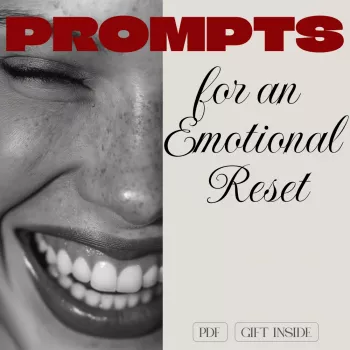
10-Minute Emotional Reset Journaling Prompts (Digital Guide)

Journaling Prompts for an Emotional Reset: A Gentle Digital Guide for Mindful Writing, Clarity, and Stress Relief
When emotions feel tangled, the fastest path to relief is often a simple, structured pause. Mindful writing creates that pause by helping thoughts slow down, feelings become nameable, and next steps feel manageable. This digital guide is designed for short, repeatable resets—whether the moment calls for calm after a hard conversation, steadying nerves before sleep, or finding clarity when everything feels loud.
What an “emotional reset” can look like in real life
A reset isn’t forcing positivity; it’s moving from overwhelmed to grounded enough to choose what happens next. Many people notice they need a reset when thoughts race, irritation spikes, emotions feel “stuck,” scenarios loop on repeat, or they shut down and go numb. Mindful writing supports self-awareness by turning vague stress into specific, workable information—needs, boundaries, choices.
The best part: a reset can be quick. Five to ten minutes is often enough to shift the nervous system from reactive to reflective, especially when the writing has a clear structure and a gentle endpoint.
Quick resets by situation
| Situation | What to write for 5 minutes | What it helps with |
|---|---|---|
| After conflict | List what happened (facts only) → what you felt → what you need now | Separates events from interpretations and reduces rumination |
| Before sleep | Brain-dump worries → circle one controllable step for tomorrow | Lowers cognitive load and supports sleep readiness |
| During stress at work | Name the stressor → write the smallest next action → write one boundary | Turns pressure into an action plan |
| Feeling numb or disconnected | Write “Right now I notice…” using senses + body sensations | Reconnects to the present moment |
| Anxious about the future | Write “If the best outcome happens…” + “If the worst happens…” + “Most likely…” | Balances catastrophic thinking with realistic framing |
How mindful writing supports clarity and stress relief
Mindful writing works because it makes the internal world easier to read. One mechanism is emotional labeling—putting words to feelings can reduce intensity and increase self-control. Writing also builds perspective; it slows the mind enough to notice patterns, triggers, and assumptions that stay invisible when thoughts are flying by.
Structure matters, too. When your page includes prompts that guide you toward needs, boundaries, and next steps, self-compassion becomes more available. Instead of “What’s wrong with me?” the tone shifts toward “What happened to me?” and “What do I need right now?” Research on expressive writing suggests benefits for stress processing and well-being when writing helps organize experiences into coherent meaning; see the American Psychological Association overview and the UT Austin Pennebaker Lab for deeper background.
Finally, mindful writing reinforces agency. Choosing one next step—even tiny—often calms the body’s stress response because your system receives a clear signal: “I’m not trapped; I have options.” For a practical health perspective, the Cleveland Clinic also highlights how journaling can support mental health habits.
What’s inside the digital guide and how to use it
The Journaling Prompts for an Emotional Reset | Digital Guide for Mindful Writing, Emotional Clarity & Stress Relief is a curated set of writing starters designed for emotional clarity, nervous-system calming, and practical next steps. It’s built for flexible pacing: use a single page when emotions spike, or follow a weekly rhythm for ongoing steadiness.
A simple flow tends to work best:
- Settle the body first (about 1 minute of breathing).
- Write without editing—messy is allowed.
- End with a brief “what I’ll do next” line, so you leave the page with traction.
Use whatever feels easiest to return to consistently: a notes app, a notebook, or a printed copy. Helpful times include after triggering moments, during transitions (like the end of the day), or when decisions feel heavy and your mind keeps changing the channel.
A 10-minute reset routine (no perfection required)
This routine is intentionally small, so it’s easy to repeat when you’re not at your best.
- Minute 1: Write a headline for the moment (example: “Overwhelmed after that email”).
- Minutes 2–6: Answer one guided question fully; let it be honest and imperfect.
- Minutes 7–9: Choose one supportive action (water, a short walk, a boundary, a message draft, or rest).
- Minute 10: Close with a grounding statement: “Right now, I can handle the next step.”
If emotions spike while writing, pause and notice your feet on the floor. Take three slow breaths, then continue only if it feels stabilizing. The goal is steadiness, not intensity.
Journaling starters to return to when you feel stuck
Making it easier to stay consistent
A simple self-care stack for deeper decompression
Writing helps the mind organize, and the body often needs a cue to release tension. Pair mindful writing with a short walk, gentle stretching, or a few minutes of heat-based relaxation to support deeper unwinding. If warmth is especially calming for you, an at-home option like an Infrared Sauna for One Person can be part of a longer decompression ritual—journal first to clear mental noise, then let your body exhale.
FAQ
How long should a reset journaling session take?
Most resets fit well in 5–15 minutes, and consistency matters more than duration. For a quick session, do a 1-minute breath, 3–5 minutes answering one prompt, and 1 minute choosing one next step.
What if writing makes me feel more emotional at first?
That can be normal—naming feelings sometimes brings them closer before they settle. Use grounding (slow breathing, noticing five things you can see, feeling your feet on the floor), and stop if you feel flooded; if emotions feel unmanageable, consider professional support.
Can I use a digital guide on my phone or is paper better?
Phone is great for convenience and making the practice more consistent, especially in the moment. Paper can feel calmer with fewer distractions; the best choice is the one you’ll actually return to when you need a reset.
Recommended for you


Best Dog Harness: Fit, Comfort, Control & Safety
Jul 26, 2026













Leave a comment