-
Shop
- Adidas
- Advanced Technologies
- AI Skills Mastery 2026 Collection
- Apple Accessories
- Best-Sellers
- Car Accessories
- Dating & Social Confidence
- Dating & Social Skills
- Digital Resources
- Education & Learning
- Family & Parenting
- Fashion
- Fashion Accessories
- Furniture
- Gadgets
- Health & Beauty
- Health & Wellness
- Home & Garden
- Home Supplies
- Kids & Babies
- Kitchen Best-Sellers
- Lighting
- Nike
- Patio, Lawn & Garden
- Personal Growth
- Pet Care
- Pet Supplies
- Pets
- Shoes
- Sport & Outdoors
- Stress Relief & Relaxation
- Summer 2025 Fashion Collection
- Sunglasses
- Super Deals
- Travel
- Travel & Outdoors
- Wealth
- Wealth Building
- Women’s Wellness & Lifestyle
- Popular
- Best deals
How to Identify Ceramic Plates: Easy At-Home Checks
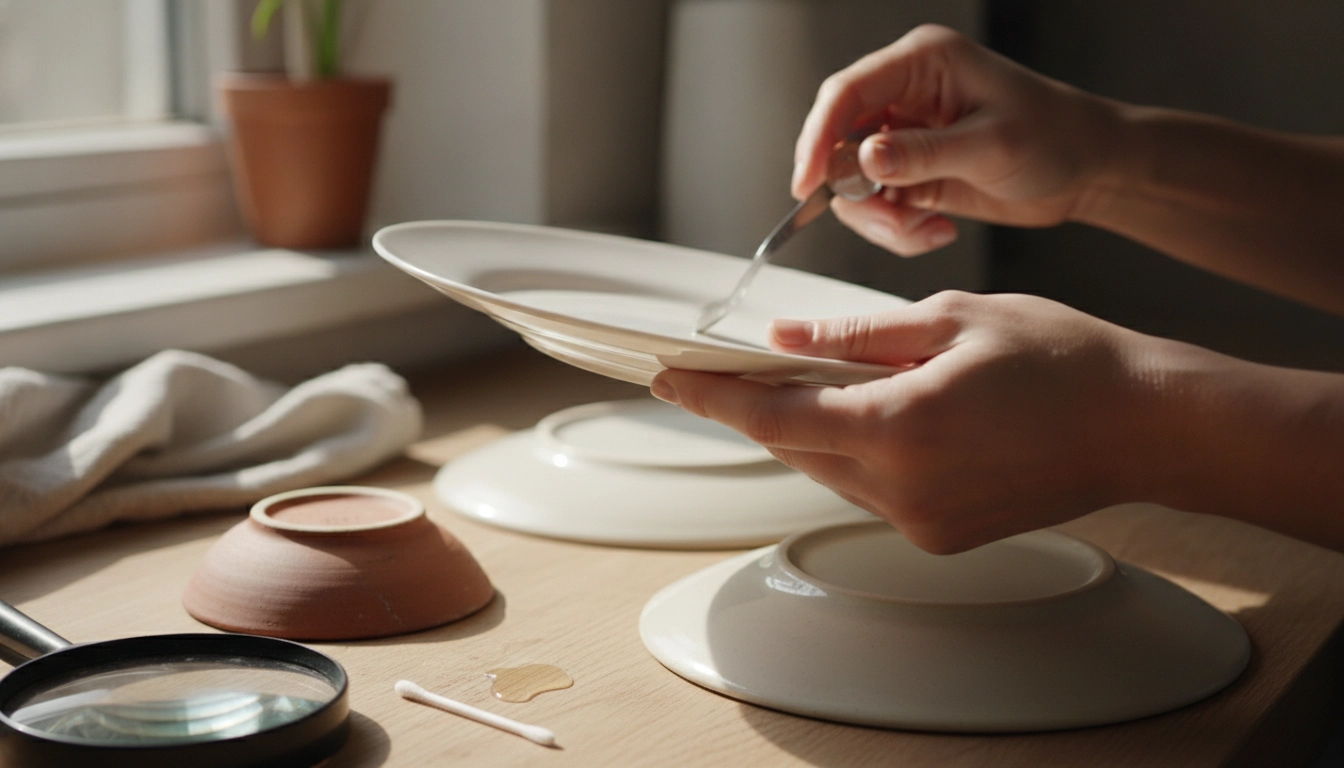
How to identify ceramic plates?
Ceramic plates are made from clay that’s shaped and fired in a kiln, then often finished with a glaze. To identify a ceramic plate confidently, use a quick mix of visual checks, touch cues, and a couple of safe at-home tests.
Check the underside (the “foot ring”)
Flip the plate over and look at the unglazed ring where it sits on the table. Many ceramic plates have a slightly rough, matte foot ring that shows the clay body. If the glaze covers the entire bottom perfectly and feels glass-smooth everywhere, it may be glass, melamine, or a fully glazed style—still possible for ceramic, but less common on everyday pieces.
Look for glaze characteristics
Ceramic glaze usually looks like a thin glassy coating that can have subtle variations, tiny pinholes, or gentle pooling near edges and embossed details. Uniform, perfectly printed designs can appear on ceramic too, but ultra-even shine and “plastic-like” patterns are more typical of melamine.
Feel the weight and temperature
Ceramic tends to feel solid and heavier than plastic. At room temperature it often feels cool to the touch, then warms slowly. Melamine and other plastics usually feel lighter and warm up quickly in your hand.
Do a careful sound test
Lightly tap the rim with a fingernail or a spoon handle. Ceramic often gives a clear “ting” or crisp click. Stoneware may sound slightly duller than porcelain, but it still won’t sound hollow like many plastics. (Avoid tapping hard—chips can happen.)
Read maker’s marks and care icons
Turn the plate over for stamps such as “stoneware,” “porcelain,” or “earthenware,” plus dishwasher/microwave symbols. While labels can be missing, a stamped clay-based term is a strong indicator it’s ceramic.
For care tips and serving ideas—especially if you’re styling a special shape—see this guide to heart-shaped ceramic plates.
FAQ
How can you tell if a plate is microwave safe?
Check the bottom for a microwave-safe symbol or wording. If it’s unmarked, avoid microwaving unless the manufacturer confirms it, since some glazes and metallic accents can overheat or spark.















Leave a comment