-
Shop
- Adidas
- Advanced Technologies
- AI Skills Mastery 2026 Collection
- Apple Accessories
- Best-Sellers
- Car Accessories
- Dating & Social Confidence
- Dating & Social Skills
- Digital Resources
- Education & Learning
- Family & Parenting
- Fashion
- Fashion Accessories
- Furniture
- Gadgets
- Health & Beauty
- Health & Wellness
- Home & Garden
- Home Supplies
- Kids & Babies
- Kitchen Best-Sellers
- Lighting
- Nike
- Patio, Lawn & Garden
- Personal Growth
- Pet Care
- Pet Supplies
- Pets
- Shoes
- Sport & Outdoors
- Stress Relief & Relaxation
- Summer 2025 Fashion Collection
- Sunglasses
- Super Deals
- Travel
- Travel & Outdoors
- Wealth
- Wealth Building
- Women’s Wellness & Lifestyle
- Popular
- Best deals
Large Cat Tree: Big Hammock & Scratching Posts Guide
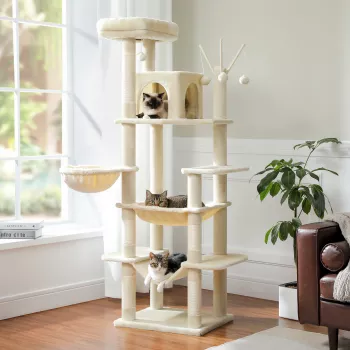
Large Cat Tree with Super Big Hammock and Scratching Posts: A Comfortable Indoor Climbing Hub
Indoor cats thrive with vertical space, cozy rest spots, and sturdy scratch zones that redirect claws away from furniture. A large cat tree with an oversized hammock and multiple scratching posts can create a single “home base” for climbing, lounging, grooming, and play—especially helpful for apartments or multi-cat households. For more guidance, see 10 Best Cat Trees – One Green Planet.
What a Large Indoor Cat Tree Adds to Daily Life
A well-built, taller cat tree does more than “give the cat a place to sit.” It changes how a cat moves through the home and how often they choose appropriate surfaces for scratching and resting. For further reading, see This DIY cat tree is truly a work of art – Adventure Cats.
- Creates vertical territory that supports confidence, movement, and restful observation from above floor level.
- Consolidates scratching, lounging, and play into one station to reduce scattered cat furniture.
- Supports natural behaviors—climb, perch, scratch, and nap—without needing outdoor access.
- Helps reduce boredom and nighttime zoomies by providing a predictable activity zone.
For more on setting up a cat-friendly indoor environment, helpful guidance is available from the American Association of Feline Practitioners (AAFP).
Super Big Hammock: Why Cats Choose It First
Many cats gravitate to a hammock before they claim the highest perch. The “sling” shape hugs the body, creating an enclosed-feeling rest spot that can seem safer than a wide, flat platform—especially for cats that love curling tightly or “sinking in” while sleeping.
- Hammock-style beds cradle the body and can feel more secure than flat platforms for many cats.
- Better for cats that like to curl tightly or “sink in” while sleeping.
- Useful as a warm-up rest spot after play; the slight sway can be soothing.
- Check stitching, attachment points, and fabric tension so the hammock stays supportive over time.
Hammock comfort checklist
| Detail to check | Why it matters | Quick test at home |
|---|---|---|
| Attachment points | Prevents sagging and sudden loosening | Wiggle the hammock edges; look for minimal shift and tight fasteners |
| Fabric thickness | Improves durability and comfort | Press with a thumb; fabric should feel dense, not thin or papery |
| Washability | Helps control odor and dander | Confirm if the hammock detaches or can be spot-cleaned safely |
| Size and depth | Supports larger cats and curlers | Cat should fit fully inside with room to reposition |
Scratching Posts That Actually Get Used
Scratching is maintenance (sheath removal), stretching, and communication all wrapped into one habit. A cat tree earns its keep when the posts are positioned and built in a way that makes them the obvious choice—right where cats naturally pause, launch, and land.
- Multiple posts at different levels encourage scratching after waking and after play.
- Thicker posts tend to feel more stable and inviting for full-body stretches.
- Placement near favorite routes (like where cats jump up) increases usage.
- Encourage adoption by sprinkling catnip near the post base or gently playing with a wand toy around it.
If scratching problems are already established, the ASPCA’s overview on scratching behavior offers practical context on why cats scratch and how to redirect the behavior without punishment.
Stability and Safety for Active Jumpers
A tall tree is only as good as its stability. Cats don’t “test slowly” when the zoomies hit; they sprint, leap, and climb at angles that can reveal wobble fast.
- A wider base and balanced platform spacing reduce wobble during fast climbs.
- For energetic cats, place the tree on a flat surface and avoid thick, plush rugs that can tilt the base.
- If wall anchoring is available, consider it for added safety—especially with multiple cats.
- Trim nails routinely to reduce snagging on fabric and to make scratching more effective.
Where to Place It Indoors (Apartment-Friendly Setup)
Placement can determine whether a cat tree becomes the household favorite or an ignored corner item. Think like a cat: routes matter, sightlines matter, and a “good seat” is often one that comes with a view.
Assembly and First-Week Adoption Tips
Cleaning and Maintenance for Long-Term Use
A Solid Pick for These Cats and Homes
Featured Option: Large Cat Tree with Super Big Hammock & Scratching Posts
If the goal is one reliable station that covers lounging and scratching daily, Large Cat Tree for Indoor Cats with Super Big Hammock & Scratching Posts is designed to bring those needs together in a single footprint.
At-a-glance buying notes
| What to confirm before ordering | Why it matters |
|---|---|
| Available space (footprint and height) | Ensures safe placement and comfortable jumping distance |
| Cat size and weight range in the listing details | Helps the hammock and platforms stay supportive |
| Return policy and replacement parts availability | Useful if a fabric piece or fastener needs swapping later |
More In-Stock Home Comfort Finds
- Infrared Sauna for One Person
- Adidas Women’s Pink Print Hooded Sweatshirt
- Tommy Hilfiger Black Leather Men’s Shoes
FAQ
Will a hammock bed support a larger indoor cat?
It can, but support depends on hammock size, fabric strength, stitching quality, and how securely it attaches to the frame. Check the listing’s weight guidance, then inspect tension and fasteners after assembly and again after the first week of use.
How can scratching posts on a cat tree stop couch scratching?
Place the cat tree within a few feet of the couch, reward any scratching on the posts, and use toys or a small amount of catnip to draw attention to the base. While the habit forms, make the couch less appealing with a cover or approved deterrent so the posts become the easiest, best option.
Where should a cat tree go for a shy cat?
Choose a quieter corner that still offers a view into the room, with clear escape routes so the cat never feels trapped. Avoid tight choke points, loud appliances, and high-traffic pathways; optional window access can help a shy cat relax while observing safely.
Recommended for you
Realistic Plush Cow Pillow Toy: Soft Fluffy Cuddle
Sep 20, 2026
5-Minute PMS Tracker Checklist (Printable + Digital)
Sep 21, 2026













Leave a comment