-
Shop
- Adidas
- Advanced Technologies
- AI Skills Mastery 2026 Collection
- Apple Accessories
- Best-Sellers
- Car Accessories
- Dating & Social Confidence
- Dating & Social Skills
- Digital Resources
- Education & Learning
- Family & Parenting
- Fashion
- Fashion Accessories
- Furniture
- Gadgets
- Health & Beauty
- Health & Wellness
- Home & Garden
- Home Supplies
- Kids & Babies
- Kitchen Best-Sellers
- Lighting
- Nike
- Patio, Lawn & Garden
- Personal Growth
- Pet Care
- Pet Supplies
- Pets
- Shoes
- Sport & Outdoors
- Stress Relief & Relaxation
- Summer 2025 Fashion Collection
- Sunglasses
- Super Deals
- Travel
- Travel & Outdoors
- Wealth
- Wealth Building
- Women’s Wellness & Lifestyle
- Popular
- Best deals
Build & Display: 3D Wooden Globe Puzzle Guide
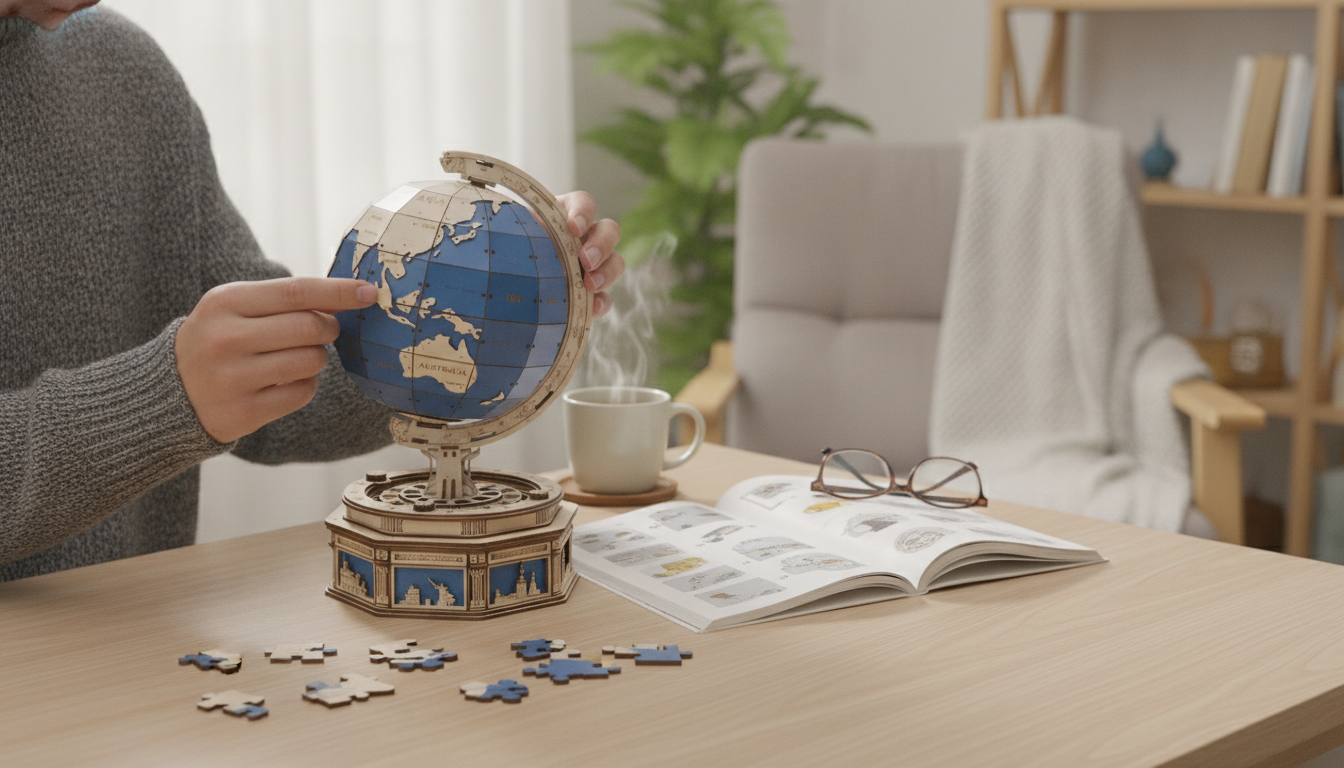
3D Wooden Globe Puzzle
A 3D wooden globe puzzle blends hands-on building with a finished piece that looks great on a shelf or desk. It’s equal parts craft project, conversation starter, and a satisfying way to slow down with a tactile build. Unlike a traditional puzzle that goes back in the box, this is the kind of project that earns a permanent spot in a home office, classroom, or reading corner—and it feels rewarding at every stage as the sphere takes shape.
What makes a wooden globe puzzle different
A globe model kit stands out because it’s designed to become a true object—not just an image. The experience is more like building a small sculpture than solving a flat jigsaw.
- Build experience: Layering and interlocking parts creates a true 3D form rather than a flat jigsaw.
- Display value: The finished globe works as décor in offices, classrooms, and reading corners.
- Skill-building: Encourages patience, spatial reasoning, and fine-motor control during assembly.
- Screen-free option: A focused, hands-on activity that suits teens and adults who want a break from scrolling.
Globes have long been used as practical geography tools and decorative objects; if you’re curious about the broader history and purpose, Encyclopaedia Britannica’s overview of a globe provides helpful context.
3D Wooden Globe Puzzle: quick details
This model is designed to be built, enjoyed, and displayed—making it a solid choice for gifting or keeping as a personal desk piece.
- Designed as a buildable globe model with wooden components
- Suitable for gifting to puzzle fans, travelers-at-heart, and makers
- Best results come from sorting pieces before starting and working on a flat, well-lit surface
At-a-glance details
| Item | Details |
|---|---|
| Product | 3D Wooden Globe Puzzle |
| Price | 35.01 USD |
| Availability | In stock |
| Material | Wood (model kit components) |
| Recommended use | Build project + display décor |
| Product page | https://majorille.com/3d-wooden-globe-puzzle/ |
Before you start: setup for a smoother build
A few minutes of prep can prevent the most common frustrations: missing small pieces, accidental scratches, and “how does this connect?” moments that slow momentum.
- Clear a large workspace: Use a desk or table with enough room to lay out pieces. Add a soft mat or towel so parts don’t slide.
- Sort pieces first: Group by shape/size so you’re not hunting mid-step.
- Use a small container: Keep tiny components in a cup or tray so they don’t disappear.
- Dry-fit when needed: If the kit uses tight joints, gently test connections to understand the orientation before pressing fully.
If your household includes younger kids, remember that many model kits include small parts. For general guidance on what qualifies as a small-part choking hazard, the CPSC overview of Small Parts Regulations is a useful reference point.
Assembly tips that help avoid common mistakes
Wooden model kits are satisfying because they’re precise—so small habits during assembly make a big difference in how cleanly everything comes together.
- Follow the sequence: Many globe models rely on correct layering; skipping ahead can create misalignment that’s hard to fix later.
- Use light pressure: Forcing tight joints can split thin wood. Gradual pressure usually seats parts cleanly.
- Keep symmetry in mind: Alternate sides when adding matching pieces to maintain an even shape.
- Check roundness as you go: Pause occasionally to confirm the sphere is staying level and consistent; small deviations early can compound later.
- Refine fit (gently): If a piece feels slightly rough, a light pass with fine sandpaper can help—avoid over-sanding so joints don’t loosen.
For builders who love that “click” of a perfect fit, the main attraction is the moment the structure starts supporting itself. That’s where a 3D Wooden Globe Puzzle really shines—each added section makes the final form more obvious and more satisfying.
How to display and style the finished globe
Once assembled, the globe becomes a décor piece with personality—warm, tactile, and more interesting than mass-produced accessories.
- Placement: Bookshelves, entryway consoles, desks, or study nooks where it can be appreciated up close.
- Pairing: Looks especially good next to travel books, vintage frames, or warm desk lighting.
- Protection: Keep away from high humidity and direct heat sources to reduce warping risk.
- Optional finish: A light clear wood-safe sealant can help with longevity (test on an inconspicuous area first).
For a cozy “build and display” corner, a comfortable seating setup can make longer sessions more relaxing. If you’re refreshing a space where you craft, read, or puzzle, consider pairing your project zone with a statement piece like the Cloud Modular Sectional Sofa with Deep Seats and Storage Ottomans for a dedicated unwind area.
Who it’s best for
If sustainability is part of how you shop for wood products, it can be helpful to understand what certifications mean. The Forest Stewardship Council explains the basics of FSC certification and responsible forestry standards.
Care, maintenance, and storage
Where to get the 3D Wooden Globe Puzzle
See current availability and ordering details on the 3D Wooden Globe Puzzle product page.
FAQ
Does a 3D wooden globe puzzle require glue or special tools?
Many wooden model kits use interlocking joints, so glue often isn’t required, though some builders choose to use a tiny amount for reinforcement. Requirements vary by kit, so it’s best to follow the included instructions; optional fine sandpaper or tweezers can make assembly more comfortable.
How long does it usually take to assemble?
Most builders can expect a few hours to a full afternoon depending on experience level and how detailed the model is. Sorting pieces first and building in short sessions can make the process smoother and more enjoyable.
Is it suitable for kids?
Because small parts and tight connections are common, it’s usually better suited to teens and adults. Younger builders may need close supervision, especially due to small components.














Leave a comment