-
Shop
- Adidas
- Advanced Technologies
- AI Skills Mastery 2026 Collection
- Apple Accessories
- Best-Sellers
- Car Accessories
- Dating & Social Confidence
- Dating & Social Skills
- Digital Resources
- Education & Learning
- Family & Parenting
- Fashion
- Fashion Accessories
- Furniture
- Gadgets
- Health & Beauty
- Health & Wellness
- Home & Garden
- Home Supplies
- Kids & Babies
- Kitchen Best-Sellers
- Lighting
- Nike
- Patio, Lawn & Garden
- Personal Growth
- Pet Care
- Pet Supplies
- Pets
- Shoes
- Sport & Outdoors
- Stress Relief & Relaxation
- Summer 2025 Fashion Collection
- Sunglasses
- Super Deals
- Travel
- Travel & Outdoors
- Wealth
- Wealth Building
- Women’s Wellness & Lifestyle
- Popular
- Best deals
Breathing Checklist for Stress: Quick Resets That Work
Why breathing works when stress hits
Stress can surge in seconds—an unexpected email, traffic that won’t move, a tense conversation, or a late-night spiral of thoughts. Breathing is one of the fastest “hands-on” tools available because it can nudge the body from a revved-up state toward steadier rhythms by slowing and smoothing the breath.
Under stress, breathing often shifts automatically: it gets shallow, faster, and creeps into the upper chest. Noticing that pattern is the first step to changing it. A short checklist helps because it removes decision fatigue. Instead of searching for the perfect method, you select one option, start, and let the body catch up.
Breathing tends to work best with a realistic goal: “take the edge off,” “regain focus,” or “fall asleep easier.” Trying to force instant calm can backfire and increase pressure. For more background on relaxation and how stress affects the body, visit NCCIH’s overview of relaxation techniques and the American Psychological Association’s guide to stress effects on the body.
How to use a breathing checklist (so it actually gets used)
A checklist only helps if it’s easy to reach for when emotions are high. The simplest approach is to build “automatic starts” into the day, keep the time commitment small, and match the technique to the moment.
1) Choose a trigger
Pick a consistent cue: opening your laptop, getting into the car, lying down, or after reading a stressful message. When the cue happens, you start the checklist—no debate.
2) Set a minimum dose
Commit to 60–90 seconds. If you have more time, keep going. If you don’t, stop without guilt. Small, repeatable reps build trust in the tool.
3) Match the technique to the moment
When anxiety spikes, longer exhales are often the most soothing. When you feel overwhelmed suddenly, a quick reset breath can help. For bedtime, choose slow, steady pacing.
4) Track the outcome in one line
Write a simple note: “Before: 7/10 tension. After: 5/10.” Seeing even small shifts increases consistency.
Quick breathing menu (pick one and start)
| Technique | Best for | Time | How it feels / cues |
|---|---|---|---|
| Extended exhale (e.g., inhale 4, exhale 6) | Anxiety spikes, racing thoughts | 1–3 min | Soften shoulders; exhale like fogging a mirror, gently |
| Box breathing (4–4–4–4) | Focus before a task, steadying nerves | 2–4 min | Even edges; pause without strain |
| 4–7–8 style breathing | Winding down, pre-sleep routine | 2–4 rounds | Longer exhale; stop if dizzy, reduce counts |
| Physiological sigh (2 inhales + long exhale) | Sudden overwhelm, tight chest feeling | 30–90 sec | Two small top-up inhales, then a slow release |
| Gentle belly breathing | Building a daily baseline, grounding | 2–5 min | Hands on belly; slow expansion and easy release |
A simple routine for different moments of the day
Breathing routines stick when they fit real life. Use the same small set of options, then “slot” them into the day where stress tends to show up.
Morning reset (2 minutes)
Do 3 cycles of extended exhale breathing (for example, inhale for 4, exhale for 6). Then add 30 seconds of relaxed belly breathing—hands on the belly, easy inhale, slower exhale—to set a calmer baseline.
Midday pressure (60–120 seconds)
Choose box breathing or extended exhales while standing with feet grounded. Unclench the jaw on the exhale and let the shoulders drop as the breath lengthens.
Before difficult conversations (90 seconds)
Do a physiological sigh for 3–5 rounds (two small inhales through the nose, one longer exhale). Then switch to a slower, steady breath to reduce reactivity.
Evening decompression (3–5 minutes)
Use longer exhales in a dim environment. Pair with a quick body scan—forehead, jaw, shoulders, hands—softening each area as you exhale.
Nighttime rumination (2–4 minutes)
Try 4–7–8 style breathing, or keep it simple: inhale gently, exhale longer. Comfort matters more than hitting perfect counts. If you’d like a deeper explanation of breath control and the stress response, Harvard Health provides a helpful overview: Breath control helps quell stress response.
Making it feel safer and more comfortable
Breathing practices should feel supportive—not like a performance. If you feel strain, it’s a signal to scale down.
What’s included in the digital breathing checklist
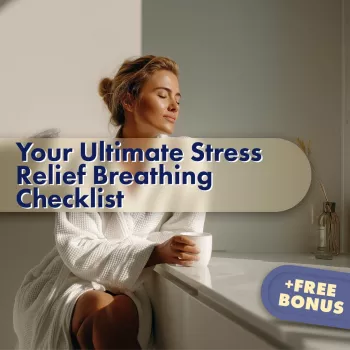
When stress is high, a structured layout can make it easier to start quickly. Breathe It Out: Your Ultimate Stress Relief Breathing Checklist (digital download) is designed to be simple to scan, fast to use, and flexible across different moments—calm-down, focus, wind-down, and quick reset.
Small upgrades that support calmer routines
- Cloud Modular Sectional Sofa with Deep Seats and Storage Ottomans for a comfortable spot to sit upright and breathe without slumping.
- 6-in-1 Hair Dryer Brush & Curling Iron Set – Ionic Hot Air Styler for All Hair Types as a simple self-care cue: pair a short breath reset with getting ready to shift from “work mode” to “home mode.”
When breathing exercises may not be enough
FAQ
How often should the checklist be used for noticeable relief?
Aim for 1–3 minutes daily to build familiarity, plus “as-needed” use during spikes. Consistency matters more than long sessions, and tracking a quick before/after tension rating helps you notice progress.
Which breathing technique is best for anxiety in the moment?
Extended exhales and the physiological sigh are often the quickest options for taking the edge off. Choose the one that feels most comfortable, and reduce counts or return to normal breathing if you feel lightheaded.
Can the checklist help with sleep?
Wind-down breathing can support relaxation by slowing the breath and giving the mind a repeatable cue that bedtime is starting. Try 4–7–8 style breathing or simply exhaling longer than you inhale, keeping everything gentle.
Recommended for you


Zipper & Clip Dog Poop Bag Holder for Easy Walks
Jun 8, 2026












Leave a comment