-
Shop
- Adidas
- Advanced Technologies
- AI Skills Mastery 2026 Collection
- Apple Accessories
- Best-Sellers
- Car Accessories
- Dating & Social Confidence
- Dating & Social Skills
- Digital Resources
- Education & Learning
- Family & Parenting
- Fashion
- Fashion Accessories
- Furniture
- Gadgets
- Health & Beauty
- Health & Wellness
- Home & Garden
- Home Supplies
- Kids & Babies
- Kitchen Best-Sellers
- Lighting
- Nike
- Patio, Lawn & Garden
- Personal Growth
- Pet Care
- Pet Supplies
- Pets
- Shoes
- Sport & Outdoors
- Stress Relief & Relaxation
- Summer 2025 Fashion Collection
- Sunglasses
- Super Deals
- Travel
- Travel & Outdoors
- Wealth
- Wealth Building
- Women’s Wellness & Lifestyle
- Popular
- Best deals
Fix Forward Head Posture: 10–15 Min Routine + Checklist

What Forward Head Posture Looks Like (and What It Often Feels Like)
Forward head posture often shows up as a subtle (or not-so-subtle) “chin-forward” position where the ears sit in front of the shoulders. Over time, the upper back may round and the shoulder blades may rest in a more protracted, rolled-forward position. The result is a posture that can look “slouched,” even when you’re trying to sit up straight.
Common sensations include neck stiffness, tension across the tops of the shoulders, upper-back fatigue, headaches that start at the base of the skull, jaw clenching, and a feeling that deep breathing is harder than it should be. Movement can also give clues: shrugging during arm raises, tightness across the chest and front of the neck, and difficulty keeping the ribcage stacked over the pelvis.
Quick self-check: take a relaxed side-profile photo (not posed). Ideally, the ear sits roughly over the midpoint of the shoulder. If the ear is noticeably forward, you likely have some degree of forward head posture.
Quick check: signs, likely contributors, and first-step focus
| What you notice | Common contributor | First-step focus |
|---|---|---|
| Chin juts forward when sitting | Screen too far/low; slouched pelvis | Raise screen; stack ribs over pelvis; gentle chin tuck practice |
| Neck tightness after phone use | Frequent downward gaze; sustained flexion | Bring phone to eye level; micro-breaks; upper-back extension drill |
| Rounded shoulders in photos | Tight chest; weak mid/lower traps | Doorway pec stretch; band pull-aparts; scapular retraction cues |
| Headaches from base of skull | Overworked suboccipitals; limited deep neck flexor endurance | Short chin-tuck holds; avoid aggressive neck stretching |
Why It Happens: The Neck–Shoulder–Upper Back Chain
Posture is a system. Head position influences the cervical spine, shoulder blade mechanics, and the mobility of the upper back (thoracic spine). A common pattern behind forward head posture is a mix of tight, overactive tissues in the front of the neck and chest, combined with underused deep neck flexors, mid-back extensors, and scapular stabilizers.
Breathing mechanics also matter. If the ribs flare up and forward, it can encourage a forward head position and shoulder elevation. Learning a calmer “stack”—ribs over pelvis with a gently long neck—often makes posture work feel more sustainable.
Most importantly, habit beats intensity. Consistent small resets throughout the week tend to outperform occasional long workouts. For general background on how posture affects the body, see Cleveland Clinic’s overview on poor posture.
Set Up the Environment: Desk, Phone, and Sleep Support
Before adding more exercises, reduce the daily positions that keep pulling your head forward. Small setup tweaks can lower your “posture load” and make strengthening work stick.
- Desk: position the top third of the monitor near eye level and keep the screen about an arm’s length away. Support the elbows and keep them close to your body.
- Keyboard/mouse: reduce reaching, keep wrists neutral, and adjust chair height so feet are flat and knees are roughly at hip level.
- Phone: bring the phone up to the face instead of dropping the head down. Consider voice-to-text or set short “check-in windows” to reduce total neck flexion time.
- Micro-break rhythm: every 30–45 minutes, take 30–60 seconds to stand, breathe, gently extend the upper back, and reset shoulder blades.
- Sleep: avoid overly high pillows that push the head forward. Side sleepers often do best with neutral neck support that fills the space between shoulder and head without tilting the chin down.
Core Exercise Routine: Mobility + Activation + Strength (10–15 Minutes)
This routine is designed to be repeatable and low-drama. Aim for smooth reps and a “long back of the neck” feeling rather than forcing perfect posture.
Warm-up (1–2 minutes)
- Nasal breathing with ribs stacked over pelvis (no rib flare).
- Gentle neck rotations without forcing end range.
Mobility (3–5 minutes)
Activation (3–5 minutes)
Strength (4–6 minutes)
Safety cues: keep the jaw relaxed, shoulders away from ears, and ribs from flaring. Stop if numbness, tingling, dizziness, or sharp pain appears. For information on cervical spine wear-and-tear conditions, NIH’s resource on cervical spondylosis is a helpful reference.
A Simple Weekly Progress Plan (Without Overthinking It)
Using AI Tools for Feedback (and When to Avoid Them)
Digital Guide Toolkit: Checklist + Exercises for Neck, Shoulder, and Upper-Back Alignment
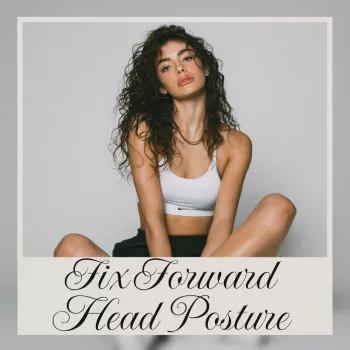
If you want an organized, follow-along plan, the Fix Forward Head Posture Guide – Digital Download eBook, Checklist & Exercises for Neck, Shoulder & Upper Back Alignment, AI Tools for Posture Improvement is designed for quick self-checks, clear sequencing, and optional AI-supported progress tracking.
For recovery-focused comfort on days your upper back feels worn down, consider supportive heat and relaxation as a complement to movement (not a replacement for it). The Infrared Sauna for One Person can be a way to build a calmer routine around breathing, decompression, and general muscle relaxation.
FAQ
How long does it take to improve forward head posture?
Many people notice small improvements in comfort and awareness in a few weeks, while visible alignment changes often take a few months of consistent practice. Environment changes (desk/phone setup) and gradual strengthening usually matter more than doing one intense stretch session.
Are chin tucks safe for everyone?
Small, controlled chin tucks are generally gentle, but they shouldn’t be forced or turned into aggressive neck flexion. Stop if you feel dizziness, tingling, or sharp pain, and consider professional guidance if you have known cervical spine conditions.
Can posture apps or AI tools replace a physical therapist?
No—apps and AI tools can help with reminders and basic visual feedback, but they can’t diagnose problems or tailor care for nerve symptoms, injuries, or complex pain. If symptoms are persistent or worsening, an in-person clinician can assess what’s actually driving the issue.
Recommended for you

Do Bike Thieves Look for AirTags? What to Expect
Jul 30, 2026













Leave a comment