-
Shop
- Adidas
- Advanced Technologies
- AI Skills Mastery 2026 Collection
- Apple Accessories
- Best-Sellers
- Car Accessories
- Dating & Social Confidence
- Dating & Social Skills
- Digital Resources
- Education & Learning
- Family & Parenting
- Fashion
- Fashion Accessories
- Furniture
- Gadgets
- Health & Beauty
- Health & Wellness
- Home & Garden
- Home Supplies
- Kids & Babies
- Kitchen Best-Sellers
- Lighting
- Nike
- Patio, Lawn & Garden
- Personal Growth
- Pet Care
- Pet Supplies
- Pets
- Shoes
- Sport & Outdoors
- Stress Relief & Relaxation
- Summer 2025 Fashion Collection
- Sunglasses
- Super Deals
- Travel
- Travel & Outdoors
- Wealth
- Wealth Building
- Women’s Wellness & Lifestyle
- Popular
- Best deals
Kids Balance Stepping Stones: 6-Piece Sensory Course
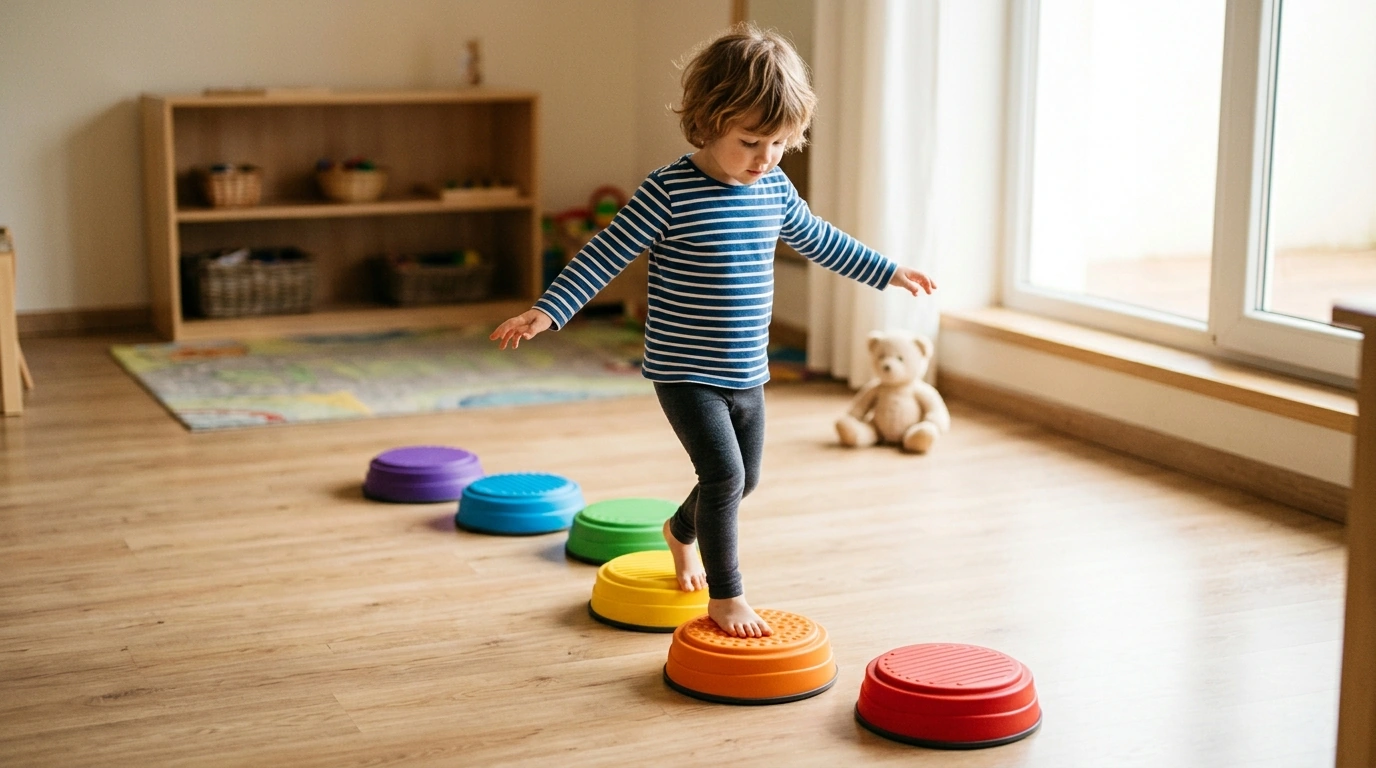
6-Piece Kids Balance Stepping Stones for Sensory Obstacle Course
Balance stepping stones turn everyday movement into a playful obstacle course that supports coordination, body awareness, and confident stepping. This set is designed for indoor or outdoor routes that can be rearranged in minutes for fresh challenges. For kids, that “one more round” feeling often comes from simple variety: a new path, a new rule, or a new way to cross.
What Balance Stepping Stones Add to Play
Stepping stone play looks simple, but it naturally builds skills that show up in playground confidence, sports readiness, and even calmer movement during transitions. With short, controlled steps, kids get repeated practice staying steady while their body shifts weight from foot to foot.
- Encourages balance and postural control through short, controlled steps
- Builds coordination by changing direction, distance, and speed
- Supports sensory-motor practice: planning a route, adjusting footing, and responding to texture and height
- Creates an easy “floor is lava” style game that keeps kids moving without complex setup
Regular active play is also a practical way to help kids meet daily movement recommendations. For broader guidance, see the CDC physical activity basics for children and the American Academy of Pediatrics on preschool activity.
Set Overview and What’s Included
This 6-piece set is sized for flexible layouts that work in compact rooms or bigger open areas. Because each piece can be moved independently, it’s easy to scale the challenge up or down without “starting over.”
- 6 stepping stones that can be arranged into straight lines, zigzags, circles, or islands
- Works well as a stand-alone activity or as one station within a larger obstacle course
- Appropriate for playrooms, classrooms, therapy spaces, backyards, and patios (surface choice matters for stability)
- Quick reset: move pieces to change difficulty without adding new equipment
If you’re setting up a dedicated movement corner, start with the 6-Piece Kids Balance Stepping Stones for Sensory Obstacle Course and rotate routes throughout the week so the activity stays “new” without needing more gear.
Ways to Build a Sensory Obstacle Course (Simple to Advanced)
One of the best features of stepping stones is how quickly they adapt to the day. On higher-energy days, make it a fast loop. On slower days, turn it into a quiet balance challenge with pauses and careful landings.
- Starter route: place stones in a gentle curve with short gaps; focus on “quiet feet” landings
- Direction change route: alternate left/right turns to practice pivoting and weight shifting
- Stop-and-go route: add a rule to freeze on certain stones (count to three, clap pattern, or name a color)
- Carry-and-cross route: carry a lightweight item (beanbag or plush) to challenge core stability
- Memory route: call out a sequence (1-3-2-6) and have the child follow it to practice planning and recall
For kids who benefit from sensory-motor variety, small changes—like adding a “freeze,” a turn, or a carry—can increase engagement without making the setup complicated. For more background on sensory processing and why movement challenges can help, visit the American Occupational Therapy Association overview of sensory integration and processing.
Safety and Setup Tips for Confident Stepping
A good route feels challenging but not risky. The goal is controlled stepping, not big leaps—especially when you’re targeting balance and body awareness.
- Choose a flat, clear surface; keep the area free of toys, cords, and loose rugs
- Start with small gaps and widen spacing gradually as confidence improves
- Use supervision for younger children and for more complex routes (turns, longer gaps, or carry tasks)
- If using outdoors, avoid slick surfaces and check for debris under each stone
- Teach safe dismounts: step down rather than jump when practicing balance-focused routes
Skill Targets to Practice (and How to Spot Progress)
Progress with stepping stones often shows up quietly: fewer pauses, less stiffness, and smoother changes in direction. Paying attention to small improvements can help you pick the next “just right” challenge.
- Balance: fewer wobbles and steadier landings on each stone
- Coordination: smoother turns and consistent stepping rhythm
- Motor planning: faster route decisions and fewer hesitations between stones
- Bilateral coordination: alternating feet more naturally rather than always leading with the same foot
- Confidence: willingness to try wider gaps or new layouts without avoiding the activity
| Skill focus | How to set up the stones | Add-on challenge |
|---|---|---|
| Balance | Short gaps in a straight line | Pause for 3 seconds on each stone |
| Motor planning | Zigzag with alternating turns | Follow a called-out sequence (e.g., 2-4-1-6) |
| Coordination | Two small clusters with a longer step between | Carry a plush toy without dropping it |
| Body awareness | Circle layout with varied spacing | Step only on “safe” numbers or colors you assign |
| Endurance | Long loop route around the room | Repeat for 3 rounds with a short rest between |
Who This Set Works Well For
Care, Storage, and Keeping Play Fresh
More In-Stock Picks
FAQ
What age is appropriate for balance stepping stones?
Many kids can enjoy stepping stones once they’re walking confidently, often around ages 2–3 and up with close supervision. Start with closer spacing for younger children and increase the challenge as their balance and attention improve.
Can these be used indoors without damaging floors?
Yes, when used on flat, clean surfaces and kept free of debris underneath each piece. Avoid slick areas and check the floor and the underside of the stones before play to help prevent scuffs.
How far apart should the stones be placed?
Begin with small gaps that allow an easy step without stretching or hopping. Gradually increase distance based on the child’s natural stride and steadiness, widening only when landings stay controlled.














Leave a comment