-
Shop
- Adidas
- Advanced Technologies
- AI Skills Mastery 2026 Collection
- Apple Accessories
- Best-Sellers
- Car Accessories
- Dating & Social Confidence
- Dating & Social Skills
- Digital Resources
- Education & Learning
- Family & Parenting
- Fashion
- Fashion Accessories
- Furniture
- Gadgets
- Health & Beauty
- Health & Wellness
- Home & Garden
- Home Supplies
- Kids & Babies
- Kitchen Best-Sellers
- Lighting
- Nike
- Patio, Lawn & Garden
- Personal Growth
- Pet Care
- Pet Supplies
- Pets
- Shoes
- Sport & Outdoors
- Stress Relief & Relaxation
- Summer 2025 Fashion Collection
- Sunglasses
- Super Deals
- Travel
- Travel & Outdoors
- Wealth
- Wealth Building
- Women’s Wellness & Lifestyle
- Popular
- Best deals
Slim 31.5-Inch White Toilet-Side Cabinet with Shelves
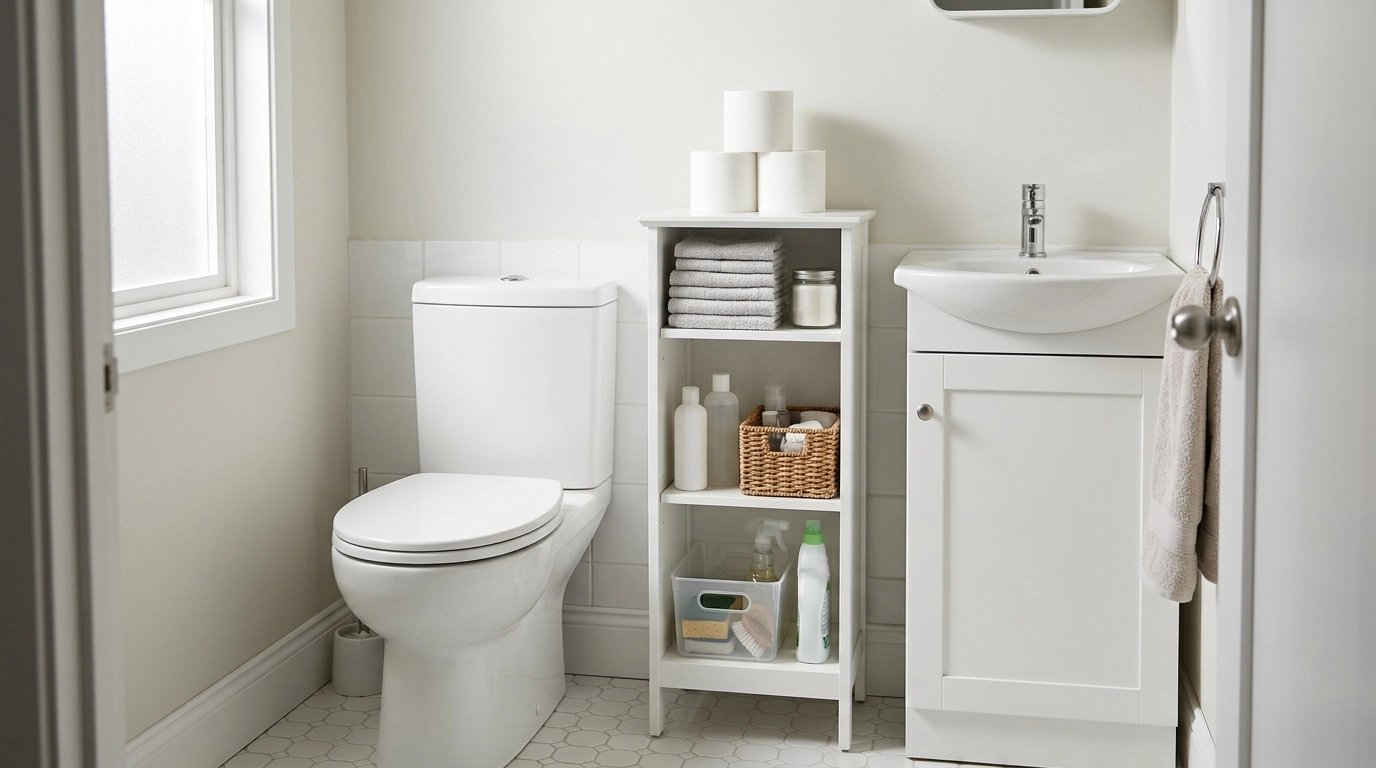
31.5″ White Bathroom Cabinet: Slim Toilet Storage Organizer with Shelves
A slim bathroom cabinet can turn the awkward space beside or near the toilet into tidy, easy-to-reach storage. This 31.5″ white organizer is designed to keep daily essentials—paper goods, cleaners, and toiletries—sorted on shelves without overwhelming a small bathroom. When floor space is limited and counters feel crowded, a narrow cabinet helps create a calmer routine by giving everything a defined home.
What this slim bathroom cabinet is designed to solve
Bathrooms collect clutter fast: a couple of extra rolls, a few bottles, and a stack of wipes can make even a clean space look messy. A toilet-side organizer focuses on the storage most bathrooms need but rarely have.
- Helps reduce countertop clutter by relocating toiletries, wipes, and spare rolls to vertical storage
- Makes use of narrow gaps beside the toilet, between fixtures, or near a vanity
- Creates clear zones for “daily use” vs. “backup stock” so items are easier to find
- A clean white finish can blend with common bathroom palettes and brighten tight spaces
Key features that matter in a narrow toilet-side organizer
In a small bathroom, the best storage pieces are the ones that feel almost invisible—until you realize how much they hold. A slim cabinet keeps the footprint modest while still adding structure.
- Slim footprint: intended for bathrooms where every inch counts
- Multiple shelves: supports separating products by category (paper goods, skincare, cleaning, first-aid)
- 31.5″ height: aims to add storage without blocking mirrors, towel bars, or wall art in most layouts
- Closed vs. open storage options (depending on configuration): can reduce visual clutter and keep items looking neat
- Neutral white look: pairs well with chrome, matte black, or brushed nickel fixtures
What to store on the shelves (and how to organize it)
A narrow cabinet works best when each shelf has a purpose. The goal is fast access for everyday items and a reliable “backup zone” so you don’t run out of essentials unexpectedly.
- Top shelf: frequently used items like hand soap refills, tissues, or a small tray for daily toiletries
- Middle shelves: toilet paper, extra hand towels, feminine care products, or hair tools in bins
- Lower shelf: cleaning sprays, brushes, and backup supplies placed in a leak-proof bin
- Use containers to prevent tipping: narrow baskets, clear bins, and stackable organizers keep small items contained
- Label by category: “Backstock,” “Cleaning,” and “Guests” helps maintain order long-term
For a neater look, group bottles by type (hair, skin, cleaning) and keep a small “reset” bin for items that tend to wander—clips, travel toiletries, or extra toothbrushes.
Fit and placement: where a slim cabinet works best
Placement is the difference between “extra storage” and “in the way.” Before committing to a spot, measure the open gap and confirm you can still clean comfortably around the toilet and baseboards.
- Beside the toilet: ideal for spare rolls, wipes, and cleaning supplies without reaching across the room
- Between toilet and vanity: a good spot when a small gap exists but drawers are limited
- Near a shower or tub: useful for rolled towels and bath products (keep items dry and ventilated)
- Guest bathroom corner: creates storage without needing a larger freestanding unit
- Before placing: measure the available width, depth clearance for doors/drawers nearby, and walking space
Quick placement checklist
| Placement area | Measure first | Avoid if |
|---|---|---|
| Next to toilet | Gap width, door swing path, cleaning access behind/around toilet | It blocks a cabinet door, toilet paper holder, or forces awkward stepping |
| Between fixtures | Distance to vanity drawers and toilet tank clearance | Drawers collide or the space is too tight to clean |
| Near shower/tub | Splash zone distance and ventilation | Direct splash exposure or persistent dampness |
| Corner area | Wall/baseboard interference and floor levelness | Uneven floors cause wobble without shimming |
Assembly and setup tips for a sturdy, wobble-free result
A slim organizer feels best when it sits square and stable—especially in a family bathroom where people brush past it daily.
- Assemble on a flat surface and tighten hardware gradually to keep panels aligned
- Check shelf level before final tightening to prevent a slight lean
- If the floor is uneven, use shims to stabilize the base and prevent rocking
- Keep heavier items on lower shelves to improve stability
- If the cabinet will be used in a high-traffic family bathroom, consider anchoring where appropriate for added safety
Bathroom-friendly care: keeping a white cabinet looking clean
Bathrooms are humid, and moisture management matters for both cleanliness and longevity. Basic upkeep also helps prevent musty odors—especially in tight spaces.
For broader moisture guidance, the EPA’s mold and moisture resources and the CDC cleaning and disinfecting guidance are helpful references for maintaining a healthier bathroom environment.
Simple styling ideas that make it look intentional
When a slim cabinet is the right choice vs. other storage options
Shop in-stock picks
- 31.5″ White Bathroom Cabinet – Slim Toilet Storage Organizer with Shelves
- Infrared Sauna for One Person
- Adidas Women’s Pink Print Hooded Sweatshirt
FAQ
Will a slim toilet-side cabinet fit in a small bathroom?
Measure the open gap width and confirm nearby doors or vanity drawers can still swing freely. A 31.5″-tall organizer is typically designed to stay visually unobtrusive while adding useful vertical storage.
What should go on the top vs. bottom shelves?
Keep daily-use, lightweight items up top for quick access. Put heavier items and anything that could leak (cleaners, refills) on the lower shelf in a tray or bin for stability and easier cleanup.
How can it be kept stable on an uneven bathroom floor?
Square up the cabinet during assembly and tighten hardware gradually so it doesn’t twist. If the floor slopes, add small shims under the base to stop rocking and store heavier items on the bottom; anchoring can add extra peace of mind in homes with kids or pets.
Recommended for you
Guess Women’s Gold Metal Sunglasses: Brown Gradient
Sep 16, 2026











Leave a comment