-
Shop
- Adidas
- Advanced Technologies
- AI Skills Mastery 2026 Collection
- Apple Accessories
- Best-Sellers
- Car Accessories
- Dating & Social Confidence
- Dating & Social Skills
- Digital Resources
- Education & Learning
- Family & Parenting
- Fashion
- Fashion Accessories
- Furniture
- Gadgets
- Health & Beauty
- Health & Wellness
- Home & Garden
- Home Supplies
- Kids & Babies
- Kitchen Best-Sellers
- Lighting
- Nike
- Patio, Lawn & Garden
- Personal Growth
- Pet Care
- Pet Supplies
- Pets
- Shoes
- Sport & Outdoors
- Stress Relief & Relaxation
- Summer 2025 Fashion Collection
- Sunglasses
- Super Deals
- Travel
- Travel & Outdoors
- Wealth
- Wealth Building
- Women’s Wellness & Lifestyle
- Popular
- Best deals
Social Confidence for Introverts: Quiet Strength Skills
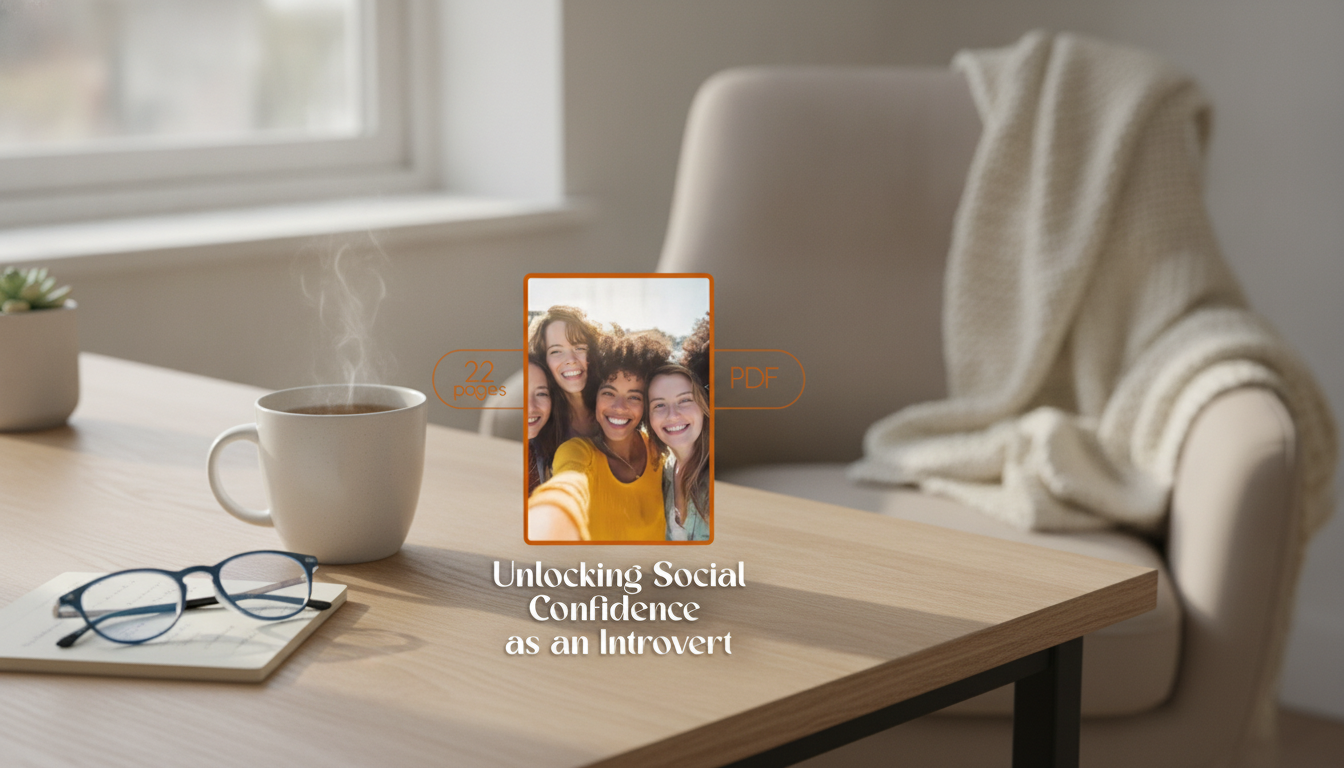
Quiet Strength: Social Confidence Tools for Introverts
Social confidence does not require becoming louder, more outgoing, or constantly “on.” For many introverts, confidence grows fastest through preparation, energy management, and a set of repeatable skills that make conversations and social settings feel safer and more natural. Quiet Strength: Unlocking Social Confidence as an Introvert is a practical eBook designed to help introverts build steady confidence, improve social skills, and feel at ease in everyday interactions—without forcing a personality change.
What Social Confidence Looks Like for Introverts
For introverts, social confidence often shows up as calm self-trust: speaking when it matters, listening well, and staying present even when things feel slightly awkward. It’s less about dominating a room and more about choosing depth over volume—fewer interactions that feel more meaningful.
It also helps to separate introversion from social anxiety. Introversion is a temperament (how you recharge and process stimulation). Social anxiety is fear-driven and can feel limiting or distressing. The skill-building approaches can overlap—especially gradual exposure and better self-talk—yet persistent or severe anxiety may require additional support. Credible resources like the American Psychological Association and the National Institute of Mental Health explain what anxiety can look like and when to seek help.
Common blockers for introverts include overthinking, fear of awkwardness, mental fatigue, and perfectionism. A realistic goal isn’t “never feeling uncomfortable”—it’s feeling capable in social settings, not flawless.
The Quiet-Strength Approach: Build Skills Without Burning Out
Social growth tends to stick when it respects introvert energy. That means energy-aware socializing: planning around recovery time and peak energy windows, and noticing the difference between “nervous” and “depleted.”
Instead of high-pressure “sink or swim” moments, the quiet-strength approach uses small, consistent exposures. Short conversations, low-stakes practice, and gentle repetition reduce anxiety loops because your brain gets evidence that you can handle interaction and recover afterward.
Another key shift is replacing mind-reading assumptions (“They think I’m boring”) with observable signals and simple questions (“How’s your week been?”). Over time, many introverts benefit from creating a personal comfort-to-growth ladder—starting with situations that feel only mildly uncomfortable and gradually leveling up.
Core Skills That Make Conversations Easier
Introverts often do well when they have structure. Conversation doesn’t need to be a performance; it can be a sequence of small, learnable moves: starting, keeping it going, sharing a bit about yourself, handling pauses, and ending well.
Start with low-pressure openers
Choose openers that match the setting (work, friends, new groups). Context-based observations and simple questions feel natural and reduce the pressure to be “interesting” right away.
Keep it going with follow-ups and bridges
Follow-up questions signal attention. Topic bridges help you move forward without abruptly changing subjects. Reflecting emotion (“That sounds exciting”) makes the interaction warmer without requiring extra talking.
Share about yourself in small, specific ways
Handle pauses without panicking
End well with a graceful exit
| Moment | What to do | Example line |
|---|---|---|
| Opening | Use a context-based observation + question | “How do you know the host?” |
| Follow-up | Ask for a detail and reflect it | “That sounds intense—what part has been the biggest change?” |
| Topic bridge | Connect to a nearby theme | “That reminds me—have you been into any new hobbies lately?” |
| Self-share | Offer a small, specific detail | “I’m more of a quiet-weekend person—coffee and a walk is my reset.” |
| Exit | Appreciate + next step | “I’m going to grab a drink, but I’m glad we talked—let’s catch up later.” |
Confidence Triggers: What to Practice Before Social Events
Navigating Common Introvert Challenges in Real Life
Group conversations
Networking
Work meetings
Dating and social outings
Awkward moments
Inside Quiet Strength: What the eBook Helps You Build
The Quiet Strength eBook is built around a step-by-step framework that grows confidence while honoring introvert energy. It includes practical conversation techniques for everyday interactions and new social settings, plus exercises and prompts designed to reduce overthinking and increase social ease over time.
Supportive Add-Ons for Your Recharge-and-Reset Routine
Confidence practice lands best when it’s paired with real recovery. Some people like to build a consistent “reset space” at home, such as a comfortable seating setup like the Cloud Modular Sectional Sofa with Deep Seats and Storage Ottomans to unwind after social effort.
Others prefer a quick confidence ritual before heading out—something as simple as getting ready efficiently can reduce last-minute stress. A tool like the 6-in-1 Hair Dryer Brush & Curling Iron Set – Ionic Hot Air Styler for All Hair Types can support a calmer, more put-together pre-event routine. And if a grounding walk is part of your decompression, a practical item like the Waterproof Dog Coat for Small and Medium Dogs – Lightweight and Warm can make that reset more comfortable in bad weather.
Who This eBook Fits Best
Getting Started This Week: A Simple 7-Day Confidence Routine
FAQ
Can an introvert become socially confident without becoming extroverted?
Yes. Social confidence is a skill set and a mindset, not a personality swap—introverts can become steady, warm, and capable by using energy management, preparation, and authentic communication.
How long does it take to feel more comfortable in social settings?
Many people notice small improvements within a few weeks of consistent practice, especially with repeatable routines. Bigger shifts often take a few months as your brain collects more “I can handle this” experiences.
Is this helpful if social anxiety is part of the problem?
It can help by building practical skills and supporting gradual, low-pressure exposure. If anxiety feels severe, persistent, or life-limiting, professional support can be important, and a skills guide can work as a helpful complement.
Recommended for you



Push-Up One-Piece Yoga Jumpsuit: Quick-Dry Comfort
Jun 10, 2026













Leave a comment