-
Shop
- Adidas
- Advanced Technologies
- AI Skills Mastery 2026 Collection
- Apple Accessories
- Best-Sellers
- Car Accessories
- Dating & Social Confidence
- Dating & Social Skills
- Digital Resources
- Education & Learning
- Family & Parenting
- Fashion
- Fashion Accessories
- Furniture
- Gadgets
- Health & Beauty
- Health & Wellness
- Home & Garden
- Home Supplies
- Kids & Babies
- Kitchen Best-Sellers
- Lighting
- Nike
- Patio, Lawn & Garden
- Personal Growth
- Pet Care
- Pet Supplies
- Pets
- Shoes
- Sport & Outdoors
- Stress Relief & Relaxation
- Summer 2025 Fashion Collection
- Sunglasses
- Super Deals
- Travel
- Travel & Outdoors
- Wealth
- Wealth Building
- Women’s Wellness & Lifestyle
- Popular
- Best deals
Switch Bluetooth Controller: Vibration + Turbo Setup Guide
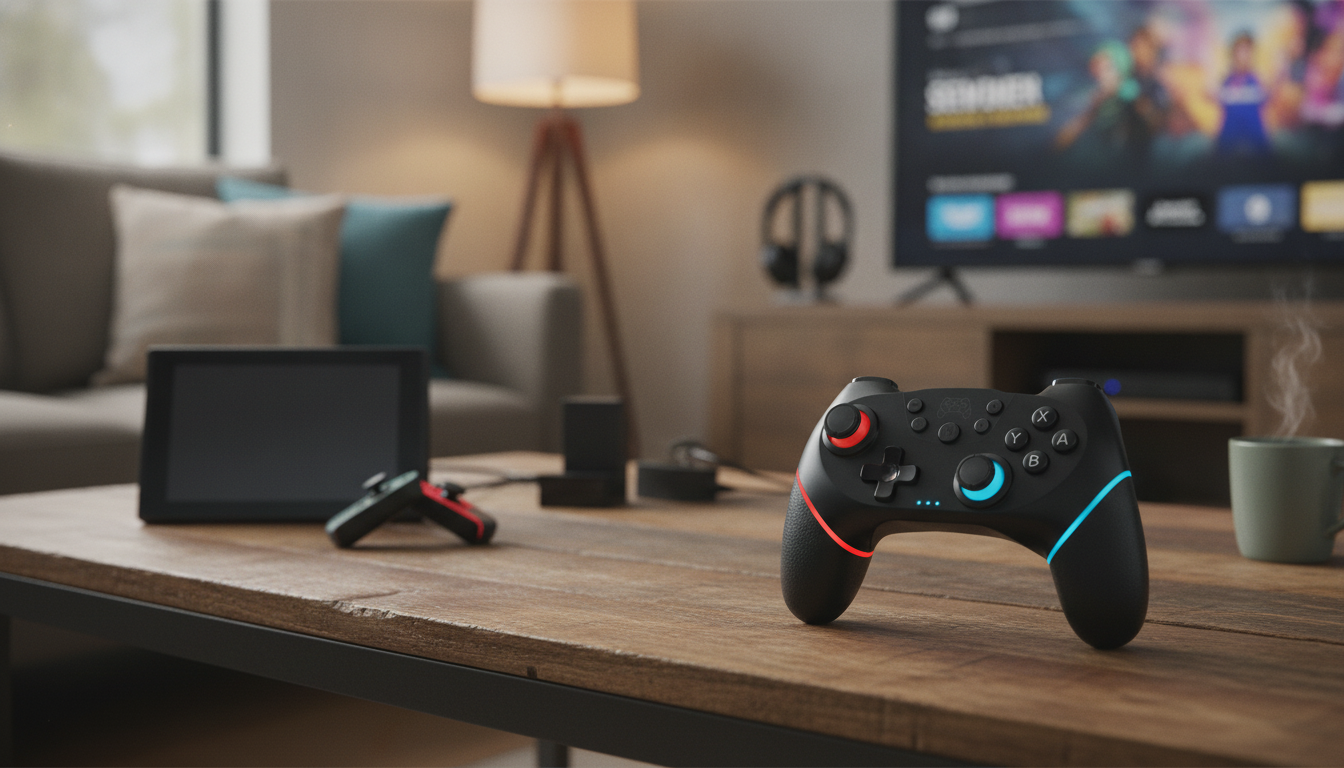
Wireless Bluetooth Game Controller with Vibration & Turbo for Switch & Multi-Platform
A wireless controller can make handheld, docked, and couch play feel more natural—especially for longer sessions, local co-op, and games that benefit from steady triggers and rumble feedback. A Bluetooth game controller with vibration and turbo is built for that “pick up and play” convenience while still giving you tactile cues and rapid input options when a game allows it. Below is a practical breakdown of what to look for, how to pair it across devices, and how to dial in comfort and responsiveness. For more guidance, see Reviews by jeromeoflaherty | Page 2 – Head-Fi.
What This Controller Adds to Everyday Play
Switch-friendly wireless controllers are all about reducing friction: less cable clutter, fewer awkward hand positions, and quicker transitions between handheld and docked play. For further reading, see Reviews by Ichos | Page 9 – Head-Fi.
- Wireless Bluetooth connection for a cleaner setup and more freedom of movement, whether you’re across the room or sitting close for competitive matches.
- Vibration feedback that helps sell impact moments in racing, action, and platformers—useful for sensing collisions, landings, and environmental effects.
- Turbo function for rapid, repeated inputs in games that permit it, which can reduce finger strain during extended sessions.
- Familiar gamepad layout that can feel more ergonomic than handheld-only play, especially when you’re playing for 60+ minutes at a time.
Compatibility at a Glance
This type of controller is designed for Switch play and is intended to work across multiple platforms via Bluetooth. Actual compatibility can vary by device, operating system, game support, and the controller’s input mode, so it’s smart to verify the basics before pairing. Keeping your console/phone/PC updated can also prevent connection quirks.
Device compatibility checklist
| Device | What to check before pairing | Common tips |
|---|---|---|
| Nintendo Switch (docked/handheld) | Controller pairing screen and wireless controllers enabled | Pair near the console; remove old pairings if connection is unstable |
| PC (Bluetooth) | Bluetooth version/driver and game input support | Use system Bluetooth settings; confirm the controller appears in the game’s input list |
| Mobile (iOS/Android) | OS controller support and game controller settings | Pair in Bluetooth settings; close other apps that may auto-grab the controller |
| Other platforms | Native Bluetooth controller support | Verify the platform supports third-party Bluetooth controllers before purchase/use |
For official troubleshooting resources and platform-specific pairing guidance, Nintendo’s support hub is a reliable reference: https://en-americas-support.nintendo.com/. For deeper technical context on Bluetooth behavior and versions, the Bluetooth SIG specifications are the authoritative source: https://www.bluetooth.com/specifications/bluetooth-core-specification/.
Vibration: When It Helps and How to Tune It
Rumble can be more than a “nice-to-have.” In many games, vibration helps reinforce timing (like the moment your tires lose grip in a racer, or a parry connects in an action title). It can also help make handheld-to-docked transitions feel consistent because you’re not relying only on audio cues.
- Reduce intensity in the game’s settings when available if vibration feels too aggressive during long sessions.
- Turn it off strategically for ultra-competitive play if it distracts you, or when conserving battery matters more than immersion.
- Use it as feedback, not noise: if rumble is constant, it can blur important cues—lowering the strength often improves clarity.
Turbo: Smart Uses (and When to Avoid It)
Turbo is best treated like an accessibility and comfort feature. It can reduce fatigue during repeated actions, but it should still respect a game’s rules and online policies.
- Good uses include permitted single-player grinding, repeated crafting/collecting actions, or rapid-fire moves where the game explicitly allows it.
- Avoid turbo in online modes where automated inputs may violate terms or trigger restrictions.
- If inputs seem “stuck” (unexpected rapid presses), disable turbo first, then re-check the controller mode and in-game control settings.
Pairing and Setup: Quick, Reliable Steps
Most pairing problems come down to low battery, old device records, or interference. A short, consistent setup routine prevents the majority of headaches.
- Charge first to avoid mid-setup disconnects and to ensure stable wireless behavior.
- On Switch: open Controller settings, choose pairing/sync, put the controller into pairing mode, then confirm it appears on-screen.
- On phones/PC: open Bluetooth settings, search for new devices, select the controller, then confirm it works in a supported game or controller test screen.
- If pairing fails: forget/remove the controller from the Bluetooth list, restart the host device, move closer to the receiver, and pair again.
Comfort and Control for Longer Sessions
Product Snapshot
Current listing details
| Item | Details |
|---|---|
| Product | Wireless Bluetooth Game Controller with Vibration & Turbo for Switch & Multi-Platform |
| Price | 24.82 USD |
| Availability | In stock |
More In-Stock Finds for a Better Game Space
- Cloud Modular Sectional Sofa with Deep Seats and Storage Ottomans
- 6-in-1 Hair Dryer Brush & Curling Iron Set – Ionic Hot Air Styler for All Hair Types
FAQ
How do turbo and vibration affect battery life?
Vibration and rapid-input features can increase power draw, so battery life may be shorter when they’re used heavily. If you’re trying to stretch playtime, turn off vibration or turbo when you don’t need them and start longer sessions with a full charge.
Why won’t the controller connect over Bluetooth?
First, charge the controller and remove (forget) it from your device’s Bluetooth list, then restart the console/phone/PC and pair again from close range. If it still fails, reduce interference (move away from metal stands or crowded wireless areas) and confirm your host device supports third-party Bluetooth controllers.
Can this be used on multiple devices without re-pairing every time?
Many Bluetooth controllers remember a recent device, but switching between Switch, PC, and mobile can still require re-pairing or changing input modes. Disconnect cleanly from the current device before pairing to a new one to avoid conflicts.
Recommended for you


Floral A5 Monthly Planner 2025–2026 (To-Dos + Notes)
Jun 15, 2026













Leave a comment