-
Shop
- Adidas
- Advanced Technologies
- AI Skills Mastery 2026 Collection
- Apple Accessories
- Best-Sellers
- Car Accessories
- Dating & Social Confidence
- Dating & Social Skills
- Digital Resources
- Education & Learning
- Family & Parenting
- Fashion
- Fashion Accessories
- Furniture
- Gadgets
- Health & Beauty
- Health & Wellness
- Home & Garden
- Home Supplies
- Kids & Babies
- Kitchen Best-Sellers
- Lighting
- Nike
- Patio, Lawn & Garden
- Personal Growth
- Pet Care
- Pet Supplies
- Pets
- Shoes
- Sport & Outdoors
- Stress Relief & Relaxation
- Summer 2025 Fashion Collection
- Sunglasses
- Super Deals
- Travel
- Travel & Outdoors
- Wealth
- Wealth Building
- Women’s Wellness & Lifestyle
- Popular
- Best deals
Wall-Mounted Cat Hammock + Scratch Mat: Cozy Vertical Perch
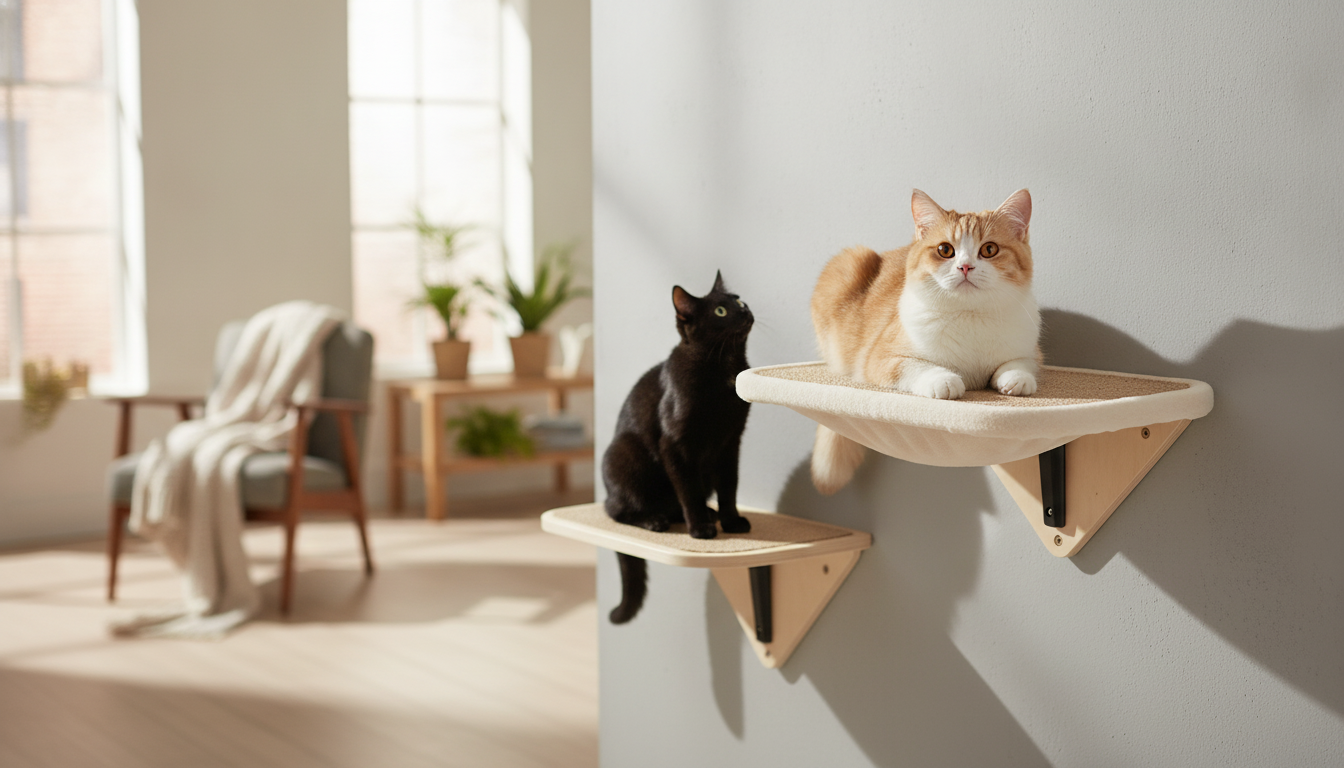
Wall-Mounted Cat Hammock with Scratching Mat: A Space-Saving Lounge and Scratch Zone
A wall-mounted hammock gives cats an elevated place to relax while keeping floors clear. When it also includes a scratching mat, it supports natural scratching behavior in a dedicated spot—helpful for protecting furniture and creating a calmer, more enriched home setup. Vertical resting areas are especially valuable for indoor cats that thrive on perching, observing, and choosing between “up high” and “down low” zones throughout the day. For more guidance, see Solid Wood Cat Tree Perch For Climbing (2-Pack).
What This Wall Setup Adds to a Cat’s Day
- Comfort with a view: Many cats prefer elevated resting spots for security and a better vantage point over the room.
- Lounge + scratch in one place: Pairing nap space with a scratch-friendly surface supports daily claw maintenance and stretching.
- Less floor clutter: Moving a bed and scratch area off the ground helps keep walkways clear and rooms feeling open.
- Routine and enrichment: A consistent perch can become part of a predictable “patrol, scratch, rest” rhythm that reduces boredom.
- Easy to expand vertically: This type of hammock can connect naturally with shelves, steps, or perches to create a climbing path.
Organizations that focus on feline welfare frequently emphasize the importance of environmental enrichment, including vertical space and predictable resources. For deeper guidance, see the American Association of Feline Practitioners (AAFP) Environmental Needs Guidelines. For further reading, see AUSCAT 7-Pack Cardboard Cat Wall Scratcher.
Key Features to Look For
- Sturdy wall mounting: The unit should feel stable when a cat jumps on and off, without wobble or flexing.
- Scratch mat texture: Look for a surface that “grabs” claws well and holds up to daily use.
- Supportive, breathable hammock fabric: A hammock should keep its shape for longer naps and stay comfortable in warmer months.
- Rounded edges and smooth surfaces: Helps prevent snagged fur, scraped paws, or sharp corners in tight spaces.
- Appropriate sizing: Consider your cat’s body length and sleeping style—curled, sprawled, or side-sleeper.
Quick Checklist for Choosing a Wall-Mounted Hammock with Scratch Mat
| Feature | Why it matters | What to confirm before buying |
|---|---|---|
| Mount strength | Prevents tipping and improves safety | Wall type compatibility and included hardware |
| Scratch surface | Encourages use instead of furniture | Texture, durability, and replaceability if applicable |
| Bed comfort | Increases daily use and reduces stress | Fabric support, breathability, and ease of cleaning |
| Placement flexibility | Fits the home layout and cat behavior | Mounting height options and clearance around the hammock |
| Multi-cat suitability | Reduces competition over prime spots | Weight capacity and whether multiple units are needed |
Scratching is normal, necessary behavior—not “bad manners.” When a cat has an appealing scratch option in the right location, it’s easier to redirect away from couch corners and rugs. The ASPCA’s overview of scratching behavior explains why cats scratch and how to encourage appropriate outlets.
Where to Mount It for the Best Results
- Pick a calmer wall: Choose a spot away from loud appliances or heavy foot traffic so resting feels safe.
- Consider a window nearby: Visual stimulation (birds, light, neighborhood movement) makes perches more appealing, but avoid constant drafts or harsh all-day sun.
- Keep the jump-up route clear: Provide a stable approach—no wobbly chairs or narrow ledges that could slip.
- Avoid tight hallways: Cats tend to skip perches that people brush past frequently.
- If building a “cat wall,” space steps comfortably: A gradual climb is more inviting than a single big leap, especially for cautious cats.
Getting Cats to Use the Hammock and Scratch Mat
Care and Upkeep
Product Spotlight: Wall-Mounted Cat Hammock with Scratching Mat
The Wall-Mounted Cat Hammock with Scratching Mat combines an elevated lounge with a dedicated scratch surface to support daily instincts—resting up high and scratching where it’s welcome. It’s a smart choice for saving floor space while adding vertical enrichment, whether used as a standalone perch or as part of a larger climbing wall arrangement. For homes aiming for a cleaner look than bulky floor scratchers, a wall-mounted option can keep the environment both cat-friendly and visually streamlined.
At-a-Glance Details
| Item | Details |
|---|---|
| Product | Wall-Mounted Cat Hammock with Scratching Mat |
| Price | $37.99 USD |
| Availability | In stock |
| Product page | https://majorille.com/wall-mounted-cat-hammock-with-scratching-mat/ |
More In-Stock Finds
- 28-Piece Natural Hair Makeup Brush Set
- Crime London Men’s White Leather Shoes
- Infrared Sauna for One Person
FAQ
How high should a wall-mounted cat hammock be installed?
A practical starting range is about 12–24 inches off the floor for cautious cats, then higher (around 36–60 inches) for confident jumpers who like to perch. Make sure there’s a stable, unobstructed jump-up route and adjust lower for seniors or cats with limited mobility.
Will a wall-mounted hammock help stop furniture scratching?
It can reduce unwanted scratching by providing a more appealing alternative, especially when placed where your cat already likes to scratch and rewarded with positive reinforcement. Some cats still prefer multiple scratch options, so pairing it with another scratcher in a different area can help.
What kind of wall is safe for mounting a cat hammock?
Any wall can be suitable if the hammock is securely anchored; mounting into studs is often the most stable option. For drywall or other surfaces, use the correct anchors and follow the included hardware instructions, then check stability routinely to ensure nothing loosens over time.
Recommended for you
Guess Sunglasses Quality: What to Expect & Check
Jul 18, 2026
Rental Property Riches: Simple First-Rental Playbook
Jul 19, 2026












Leave a comment