-
Shop
- Adidas
- Advanced Technologies
- AI Skills Mastery 2026 Collection
- Apple Accessories
- Best-Sellers
- Car Accessories
- Dating & Social Confidence
- Dating & Social Skills
- Digital Resources
- Education & Learning
- Family & Parenting
- Fashion
- Fashion Accessories
- Furniture
- Gadgets
- Health & Beauty
- Health & Wellness
- Home & Garden
- Home Supplies
- Kids & Babies
- Kitchen Best-Sellers
- Lighting
- Nike
- Patio, Lawn & Garden
- Personal Growth
- Pet Care
- Pet Supplies
- Pets
- Shoes
- Sport & Outdoors
- Stress Relief & Relaxation
- Summer 2025 Fashion Collection
- Sunglasses
- Super Deals
- Travel
- Travel & Outdoors
- Wealth
- Wealth Building
- Women’s Wellness & Lifestyle
- Popular
- Best deals
Wooden Montessori Matching Toys for Calm Baby Learning
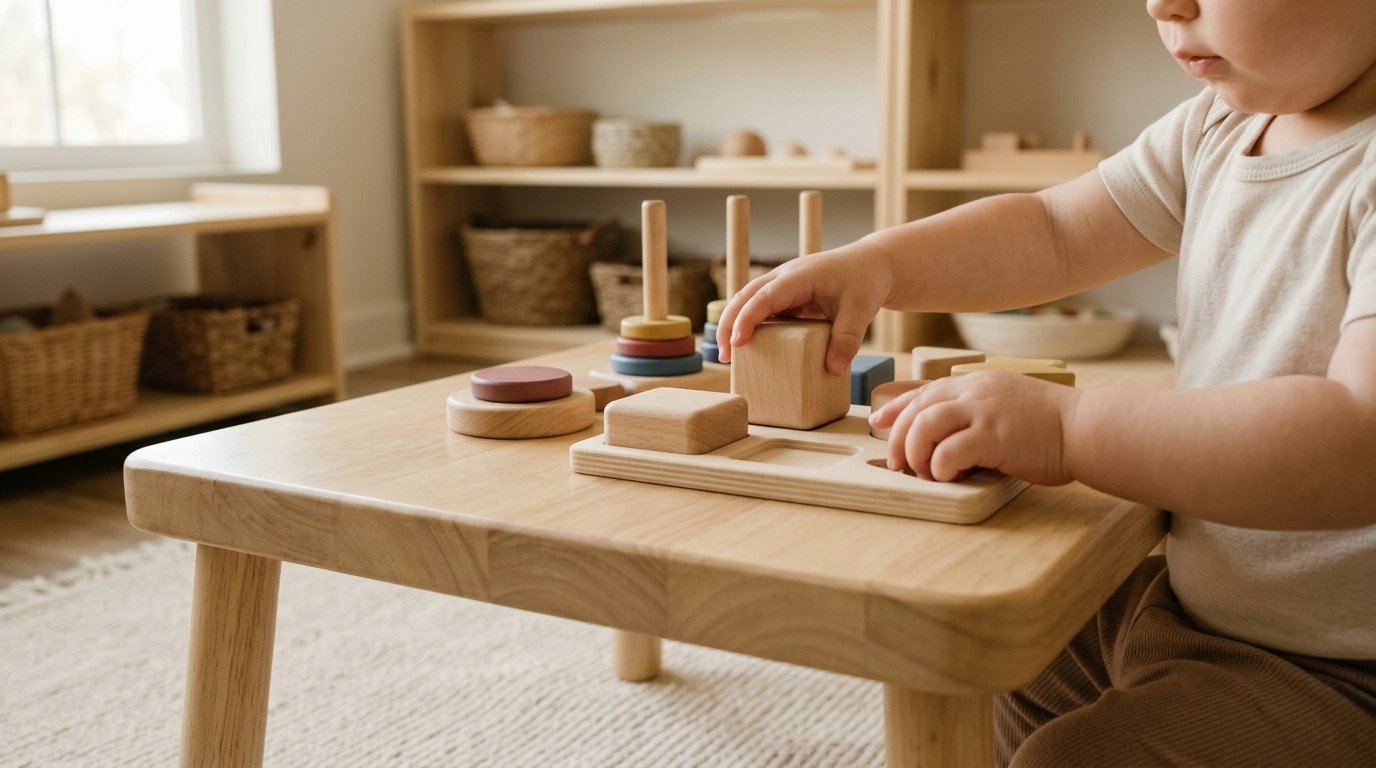
Wooden Montessori Baby Matching Toys: Calm, Hands-On Learning Through Play
Matching activities are a simple way to support early thinking skills without screens or noise. Wooden Montessori baby matching toys invite babies and toddlers to explore with their hands: comparing shapes, pairing images, sorting pieces, and practicing gentle problem-solving at their own pace. The right set balances safety, durable materials, and just enough challenge to keep little hands engaged. For more guidance, see 7 Best Montessori Baby Toys of 2023.
What matching toys help babies practice
Matching looks simple on the surface, but it quietly supports several early developmental skills that show up later in everyday tasks (like finding the right lid, sorting laundry colors, or pairing socks). For further reading, see 25 Favorite Montessori Toys on Amazon – Mamas Cold Coffee.
- Visual discrimination: noticing small differences in color, shape, and pattern
- Early problem-solving: testing pieces, correcting mistakes, trying again
- Hand-eye coordination: guiding a piece into the correct space or pairing it with a match
- Fine-motor control: grasping, pinching, rotating, and placing wooden pieces
- Language foundations: naming objects, colors, and categories during play
- Concentration and persistence: short, repeatable tasks that build focus over time
If you’d like a broader picture of what skills tend to appear at different ages, the CDC developmental milestones guide can help you align toy challenge with what your child is ready to practice next.
Why wooden Montessori-style toys feel different
Not all matching toys create the same experience. Montessori-style sets tend to be calmer and more “work-like” (in a good way): a clear goal, a beginning and end, and room for a child to repeat the same action until it clicks.
- Purposeful simplicity: fewer features encourages deeper attention rather than constant stimulation
- Tactile feedback: wood offers weight and texture that supports controlled movements
- Error-friendly learning: many matching tasks make mistakes obvious without needing adult correction
- Open-ended progression: the same set can be used for simple pairing first, then sorting and patterning later
- A calmer play rhythm: supports independent play and short, focused work cycles
For families building peaceful routines at home, the American Montessori Society’s Montessori at Home resources offer practical ideas for setting up child-friendly spaces and choosing activities that support independence.
A quick guide to ages and challenge levels
The “best” matching toy is the one that meets your child where they are. Aim for a level where success happens often, with just a little bit of thinking required.
- Around 6–12 months: larger pieces, simple picture matching, easy-to-grasp shapes, supervised mouthing expected
- Around 12–24 months: basic shape matching, 2–4 category sorting, simple color pairing
- Around 2–3 years: more pieces, multi-attribute sorting (color + shape), simple sequences and memory-style matching
- If frustration rises: reduce options (offer fewer pieces) and increase success opportunities
- If boredom appears: add a timer-free “find the pair” hunt or sort by two rules instead of one
Matching activities by developmental skill
| Activity | What it practices | How to make it easier | How to make it harder |
|---|---|---|---|
| Picture-to-picture pairing | Visual scanning and pairing | Offer 2 pairs only | Mix more pairs; add similar images |
| Shape insertion/matching | Hand-eye coordination and rotation | Use fewer shapes; demonstrate once | Add shapes with similar outlines |
| Color sorting | Categorization and attention | Start with two colors | Sort by color and size together |
| Object category sorting | Language and concepts | Use familiar items (animals/foods) | Add sub-categories (farm vs. wild) |
| Simple pattern building | Early logic and sequencing | AB pattern with two colors | ABC patterns; copy from a card |
Safety and materials checklist for wooden baby toys
Babies learn with their whole bodies—hands and mouth included—so safety features matter as much as educational value. For a deeper overview, review the American Academy of Pediatrics toy safety guidance and compare it with the product details.
Simple ways to use matching toys at home
Featured option: Wooden Montessori Baby Matching Toys
If you’re looking for a hands-on set built around pairing and early sorting, Wooden Montessori Baby Matching Toys is designed to keep the focus on simple, repeatable actions. The tactile wooden feel supports controlled movement, while the matching goal encourages a child to try, adjust, and complete the task.
Optional add-on: a small self-care gift for the grown-up
Matching activities often become a quiet daily ritual—especially when an adult can sit nearby without needing to “perform.” If you’re building a gift bundle for a new parent, a small personal treat can be a thoughtful extra alongside the child’s toy, such as the 28-Piece Natural Hair Makeup Brush Set.
FAQ
What age is best for wooden matching toys?
Many families start around 6–12 months with larger, easy-to-grasp pieces and very simple picture or shape matching under close supervision. From 12–24 months, basic shape matching and simple sorting usually click, and ages 2–3 years often enjoy more pieces, multi-step sorting, and early patterning. If you’re unsure, begin with fewer pieces and add challenge gradually.
Are wooden toys safe for babies who mouth everything?
They can be, as long as you choose non-toxic finishes, smooth edges, and pieces sized appropriately for the child’s age, and you supervise closely. Avoid sets with small detachable parts for younger babies, and routinely check for damage like cracks, splinters, or loosening pieces. Always follow the manufacturer’s age guidance.
How can matching toys support speech and vocabulary?
Matching play makes it easy to name what your child sees and does: colors, shapes, and common objects. Use short phrases such as “Find the red circle,” “That’s an apple,” or “Two apples match,” and add category words like “animals” or “foods.” Turn-taking prompts (“Your turn,” “My turn”) also build practical communication.












Leave a comment