-
Shop
- Adidas
- Advanced Technologies
- AI Skills Mastery 2026 Collection
- Apple Accessories
- Best-Sellers
- Car Accessories
- Dating & Social Confidence
- Dating & Social Skills
- Digital Resources
- Education & Learning
- Family & Parenting
- Fashion
- Fashion Accessories
- Furniture
- Gadgets
- Health & Beauty
- Health & Wellness
- Home & Garden
- Home Supplies
- Kids & Babies
- Kitchen Best-Sellers
- Lighting
- Nike
- Patio, Lawn & Garden
- Personal Growth
- Pet Care
- Pet Supplies
- Pets
- Shoes
- Sport & Outdoors
- Stress Relief & Relaxation
- Summer 2025 Fashion Collection
- Sunglasses
- Super Deals
- Travel
- Travel & Outdoors
- Wealth
- Wealth Building
- Women’s Wellness & Lifestyle
- Popular
- Best deals
32ft PVC Vent Duct Hose for 12-Inch Exhaust Fans
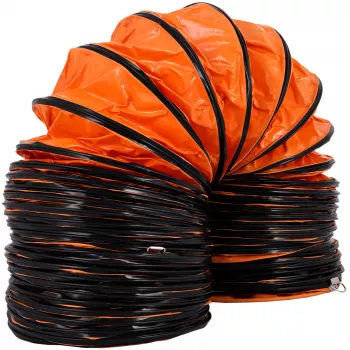
32FT Flexible PVC Ventilation Duct Hose for 12-Inch Exhaust Fans
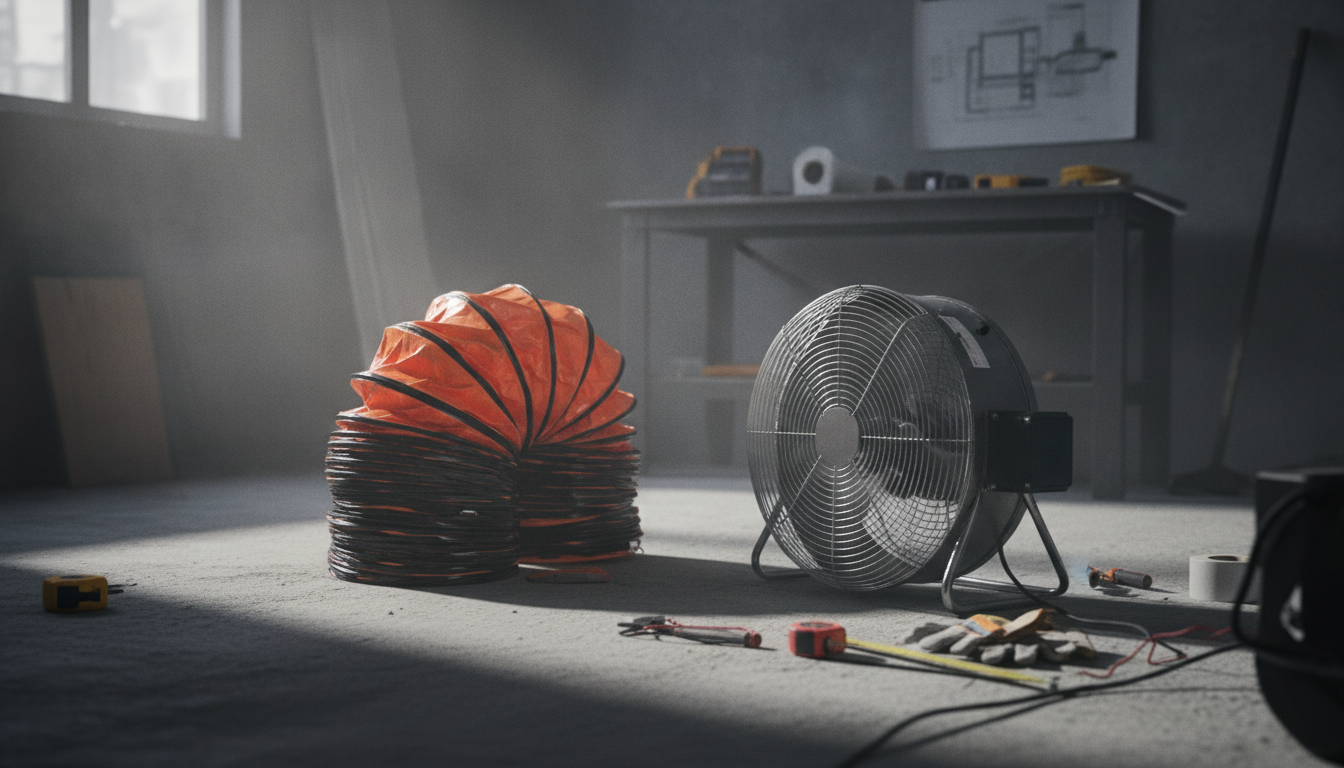
A long-run ventilation duct can make the difference between moving stale air out quickly and fighting backpressure, leaks, and kinks. A flexible PVC duct hose designed for 12-inch exhaust fans helps cover extended distances while staying lightweight and easy to handle—an advantage for workshops, construction sites, grow rooms, and temporary air-exchange setups where rigid ductwork isn’t practical.
Where a 32-foot flexible duct run helps most
A 32-foot run is especially useful when the best fan location and the safest discharge point are far apart. Instead of forcing a short duct to “make it work” with awkward adapters or risky exhaust placement, a longer continuous hose gives you cleaner routing options.
- Spot ventilation in construction and restoration: Direct fumes, dust, or humid air from a work zone to a safer discharge point.
- Basements, crawlspaces, and attics: Route air through tight paths without relying on rigid elbows.
- Workshops and garages: Remove sanding dust and odors during short-term projects.
- Grow rooms and tents: Extend fan placement flexibility while keeping intake/exhaust paths organized.
- Events and temporary setups: Quick deployment for cooling or air exchange where permanent ductwork isn’t available.
For safety planning around dusts, fumes, and general ventilation practices, refer to guidance from OSHA’s Ventilation topic page and hazard references such as the NIOSH Pocket Guide to Chemical Hazards.
Key features to look for in a flexible PVC ventilation duct
Flexible ducting is often chosen because it’s fast to deploy and easy to reroute. Still, performance depends on a few basics that affect static pressure, leakage, and long-term durability.
- Diameter match: A true 12-inch connection helps maintain airflow and reduces whistling and turbulence.
- Length planning: Account for the full routing path plus slack for bends, mounting, and repositioning.
- Flexibility vs. collapse resistance: The duct should bend around obstacles while staying open under suction.
- Surface and material: PVC-style ducts are commonly chosen for wipe-down cleaning and moisture tolerance in many temporary environments.
- Connection method: Confirm compatibility with common fan collars, clamps, and quick-connect couplers.
| Setup factor | Why it matters | Practical tip |
|---|---|---|
| Number of bends | Each bend increases resistance and can reduce effective airflow | Keep routing as straight as possible; use gentle curves instead of sharp turns |
| Run length | Longer runs can reduce airflow if the fan isn’t sized for static pressure | If airflow feels weak, shorten the run or reduce bends before upgrading the fan |
| Connection seal | Leaks waste airflow and can pull contaminated air back into the space | Use a properly sized clamp and seal the collar area if needed |
| Support and sag | Sagging sections can pinch the duct and trap condensation or debris | Suspend or strap the duct at intervals to keep a round cross-section |
| Discharge placement | Exhaust location affects safety and comfort | Route exhaust away from doors, windows, and occupied areas when possible |
How to size and route a 12-inch duct for better airflow
Even with a 12-inch fan, airflow can fall off quickly when a duct is over-compressed, sharply bent, or forced through a maze of obstacles. A few routing habits help preserve performance without changing equipment.
- Confirm the fan’s outlet size: Choose a duct that fits cleanly without stretching or relying on multiple reducers.
- Minimize restrictions: Avoid compressing the duct more than necessary and keep it pulled taut enough to prevent ridges from stacking.
- Reduce sharp corners: Route with broad arcs and keep bends separated rather than back-to-back.
- Plan for make-up air: Exhausting air out requires a path for fresh air to enter, otherwise performance drops.
- Match the fan to the job: If using filters or long discharge paths, a fan rated for higher static pressure can help maintain flow.
Installation basics: secure connections, fewer leaks
Most “weak airflow” complaints come down to leakage at the collar or a duct that has partially collapsed. A careful install reduces waste and keeps the hose stable during operation.
Care, storage, and reuse
Product option: 32FT Flexible PVC Ventilation Duct Hose for 12-Inch Exhaust Fans
When a single continuous run is preferred over joining multiple short sections, the 32FT Flexible PVC Ventilation Duct Hose for 12-Inch Exhaust Fans is built for long routing distances where fan placement and discharge location are far apart. The flexible build supports temporary ventilation, quick rerouting, and constrained spaces, pairing naturally with 12-inch exhaust fan setups used on job sites, in workshops, and in other fast-change environments.
More in-stock picks
- Cloud Modular Sectional Sofa with Deep Seats and Storage Ottomans
- 6-in-1 Hair Dryer Brush & Curling Iron Set – Ionic Hot Air Styler for All Hair Types
- Waterproof Dog Coat for Small and Medium Dogs – Lightweight and Warm
FAQ
Does a longer duct reduce airflow on a 12-inch exhaust fan?
Yes—longer runs and sharp bends increase resistance. Keep the route as straight as possible, reduce bends, and avoid compressing the duct; if performance is still low, shorten the run or use a fan rated for higher static pressure.
How should a 12-inch flexible duct be attached to prevent leaks?
Use a correctly sized clamp around the fan collar and ensure the duct is fully seated before tightening. For dusty or odor-sensitive applications, sealing the joint can help, and it’s smart to check for leaks after startup.
Can flexible PVC ducting be reused between projects?
Often yes if it remains intact and holds its shape under airflow. Clean it, inspect for punctures or crushed sections, and store it loosely coiled to avoid permanent kinks.















Leave a comment