-
Shop
- Adidas
- Advanced Technologies
- AI Skills Mastery 2026 Collection
- Apple Accessories
- Best-Sellers
- Car Accessories
- Dating & Social Confidence
- Dating & Social Skills
- Digital Resources
- Education & Learning
- Family & Parenting
- Fashion
- Fashion Accessories
- Furniture
- Gadgets
- Health & Beauty
- Health & Wellness
- Home & Garden
- Home Supplies
- Kids & Babies
- Kitchen Best-Sellers
- Lighting
- Nike
- Patio, Lawn & Garden
- Personal Growth
- Pet Care
- Pet Supplies
- Pets
- Shoes
- Sport & Outdoors
- Stress Relief & Relaxation
- Summer 2025 Fashion Collection
- Sunglasses
- Super Deals
- Travel
- Travel & Outdoors
- Wealth
- Wealth Building
- Women’s Wellness & Lifestyle
- Popular
- Best deals
Minimalist Wardrobe Guide: Build a Capsule That Works
Simply Stylish: The Ultimate Guide to Creating a Minimalist Wardrobe
A minimalist wardrobe makes getting dressed faster, shopping more intentional, and outfits more consistent with personal style. The goal isn’t a tiny closet for its own sake—it’s keeping what fits, flatters, and works together, then filling true gaps with versatile pieces that earn their space. As a bonus, buying less and wearing items longer can reduce textile waste, a growing issue noted by the U.S. Environmental Protection Agency (EPA) and the Ellen MacArthur Foundation.
What “minimalist” really means for personal style
- Focus on repeatable outfits built from a small set of compatible colors, silhouettes, and fabrics.
- Prioritize fit, comfort, and durability over trends and “special occasion only” items.
- Aim for fewer decision points: fewer categories, fewer duplicates, clearer rules for what enters the closet.
- Choose a definition that matches lifestyle (office, remote, parenting, travel, creative work) rather than a fixed item count.
Set your wardrobe rules: lifestyle, palette, and silhouettes
1) Do a quick lifestyle audit
Write down a typical week: work, errands, workouts, social plans, weather realities, and any dress codes. Assign rough outfit percentages (for example: 60% casual, 30% work-polished, 10% events). This keeps the wardrobe from over-serving fantasy situations.
2) Choose a palette that mixes automatically
Pick 2–3 neutrals (think black, navy, cream, gray, olive), 1–2 accent colors, and one “signature” tone that feels like you. When nearly everything coordinates, outfits happen with less effort and fewer purchases.
3) Define silhouettes you actually repeat
Identify 2–3 go-to shapes that feel like “you,” such as straight-leg + fitted top, wide-leg + tucked knit, or midi skirt + cropped jacket. These become outfit formulas you can recreate with small variations.
4) Set fabric standards
Decide what feels best and holds up: cotton, denim, wool, linen, and quality blends typically wear well. Also note what you avoid (itchy knits, high-maintenance dry-clean-only items, fabrics that pill quickly) so you stop buying pieces that never become staples.
5) Create footwear and outerwear rules
Minimalism falls apart when shoes and coats don’t match real life. Keep only the pairs that handle your actual weather and routines—commuting, walking, meetings, school pickup, travel days.
Declutter without regret: a step-by-step edit
- Start with a quick win: remove damaged, uncomfortable, or never-worn items immediately.
- Try-on pass: keep only pieces that fit right now and feel good for at least one complete outfit.
- Duplicate check: keep the best version of each category (best black tee, best jeans) and release the rest.
- Create three holding zones: Keep, Tailor/Repair, and Out (donate/sell/recycle) with a deadline.
- Sentimental pieces: store separately and limit them to a small container so daily wear stays functional.
A practical rule: if something needs “someday” conditions (weight change, the perfect event, the right shoes) to work, it’s not earning daily closet space.
Build a capsule that mixes effortlessly
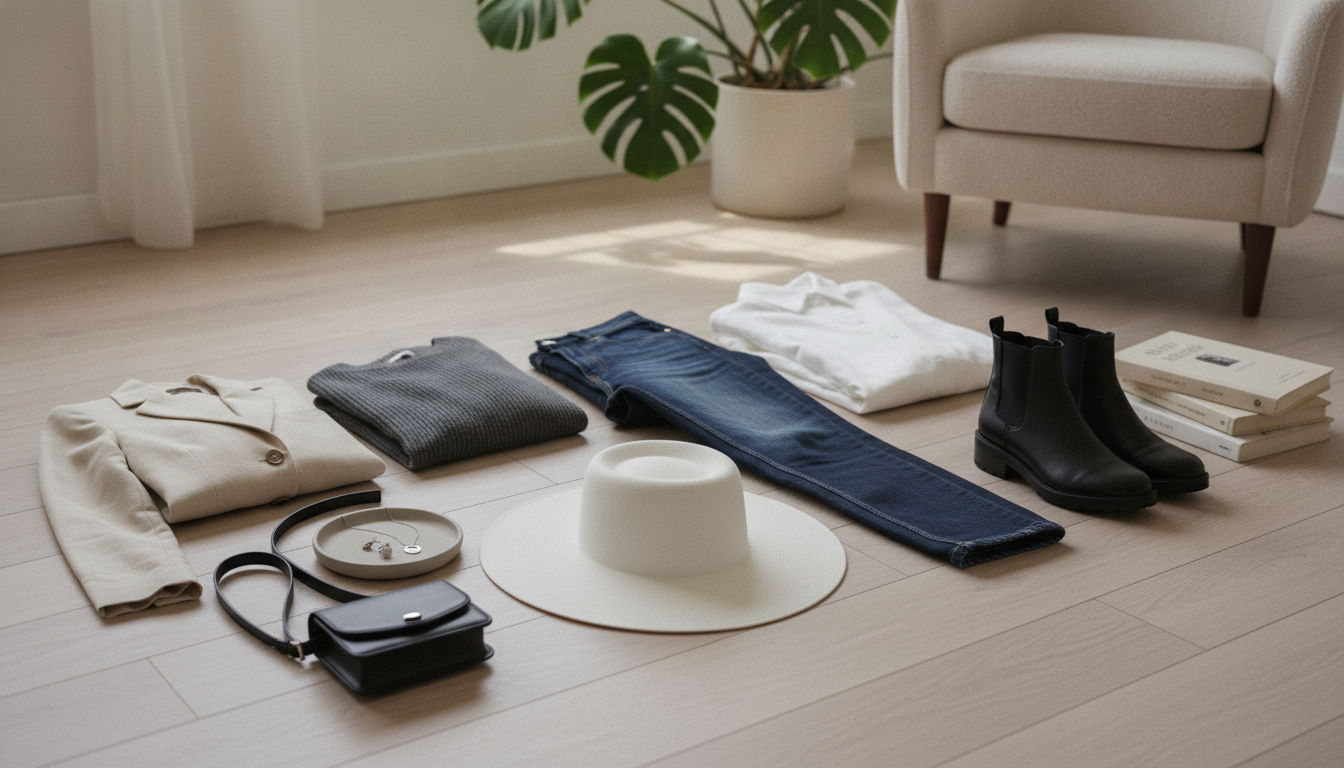
Start with a foundation of tops, bottoms, layers, and shoes that can create at least 10 reliable outfits. Add personality strategically—one standout piece per category (a great jacket, an interesting shoe, a bold knit) can keep the wardrobe from feeling flat.
- Use the 3-way rule: each new item should work with at least three existing items.
- Choose layers that change the look: blazer, cardigan, overshirt, trench, denim jacket.
- Keep occasion needs minimal: one versatile dress or jumpsuit, polished shoes, and one refined bag go a long way.
Minimalist capsule starter set (adjust to climate and dress code)
| Category | Core pieces | Why it earns a spot |
|---|---|---|
| Tops | 2 tees, 2 elevated tops, 1 button-down | Covers casual to polished and layers easily |
| Bottoms | 1 jeans, 1 tailored pant, 1 skirt or second pant | Provides contrast and outfits for multiple settings |
| Layers | 1 cardigan/knit, 1 blazer or structured jacket, 1 weather layer | Transforms outfits and handles temperature shifts |
| Shoes | 1 everyday sneaker/flat, 1 dressier option, 1 weather pair | Prevents “nothing to wear” caused by footwear gaps |
| One-piece | 1 versatile dress or jumpsuit | Instant outfit that can be dressed up or down |
| Accessories | 1 belt, 1 bag, minimal jewelry set | Adds finish without creating clutter |
Quality, care, and cost-per-wear decisions
Seasonal refresh without over-shopping
Make getting ready simpler: a minimalist styling routine
If hair styling is part of the daily routine, a multi-tool can reduce clutter while keeping options open. The 6-in-1 Hair Dryer Brush & Curling Iron Set – Ionic Hot Air Styler for All Hair Types is one way to consolidate tools and stick to a consistent, low-fuss finish.
A guided approach with Simply Stylish
For a structured plan—from defining preferences to setting closet rules and building repeatable outfit formulas—use Simply Stylish: The Ultimate Guide to Creating a Minimalist Wardrobe. It’s designed to help avoid common decluttering pitfalls, keep shopping intentional, and maintain a cohesive closet long after the first edit.
FAQ
How many items should a minimalist wardrobe have?
A minimalist wardrobe often lands somewhere around 25–60 core pieces, but the right number depends on lifestyle, climate, and how often laundry happens. A better target is having enough items to create 10–20 outfits you genuinely wear on repeat.
What should be removed first when decluttering a closet?
Start with anything damaged, uncomfortable, or never worn. Next, remove items that don’t fit right now and extra duplicates, then do a try-on pass and set a clear deadline for tailoring or repairs.
How can outfits look different with fewer clothes?
Use layering (blazer, cardigan, jacket), a tight color palette, and a few outfit formulas to create variety. Then change one element at a time—swap shoes, add a belt, or rotate a single statement piece—so looks feel fresh without needing more clothes.
Recommended for you
32ft PVC Vent Duct Hose for 12-Inch Exhaust Fans
Jun 19, 2026









Leave a comment